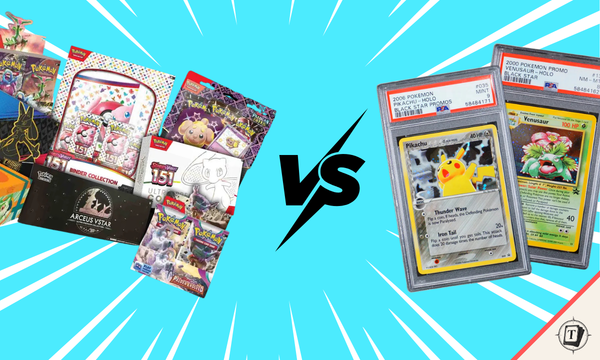
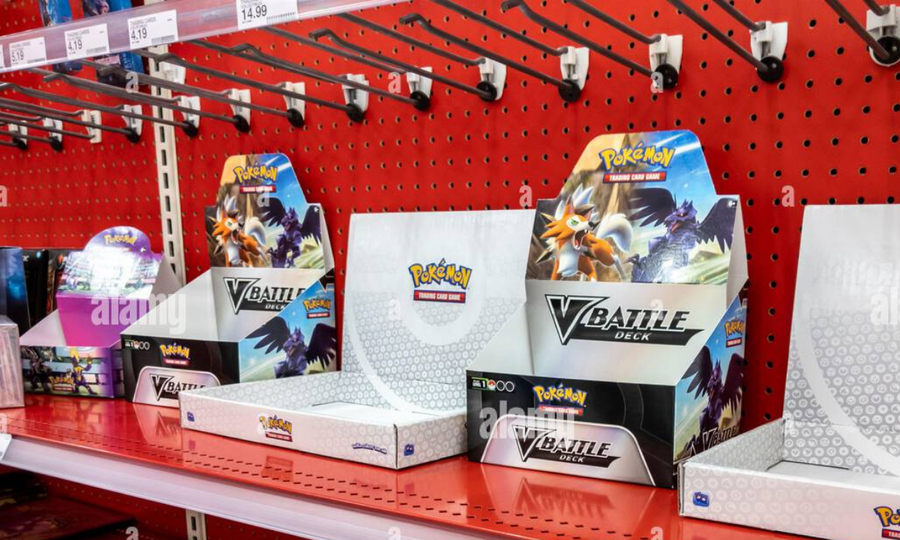
Walk into almost any local game store, check Reddit, or scroll through social media, and you’ll quickly encounter a prevailing sentiment in the TCG community: a deep-seated frustration (sometimes even hate) with scalpers. These individuals, who acquire highly sought-after products on masse only to resell them at wildly inflated prices, are widely reviled for making essential items inaccessible to players and casual collectors, and really the kids these cards are actually for. Here at The TCG Times, we hear the outrage (and feel it), and we understand the immediate pain and disappointment they cause. However, as an investment-focused publication, we are compelled to explore an uncomfortable truth: while we may despise their methods, scalpers, in a strange and often unintentional way, can contribute to the long-term appreciation of our TCG portfolios…. yep you know where we are going with this one.
This is not an endorsement of scalping, nor is it a justification for their impact on accessibility. We know the pain of seeing empty shelves for weeks. The TCG Times team firmly believes that everyone, especially that 12-year-old walking into a store, should have a fair chance to acquire product at RRP straight off the shelf. The frustration of being priced out of a new set or a must-have single is real and detrimental to the hobby’s immediate health and enjoyment.
However, when we were looking into the topic from a purely financial and investment perspective, the dynamics shifted. Scalpers, by their very nature, thrive on scarcity and demand. And it is this very scarcity, amplified or not, that can act as a HUGE boost for the values of existing, already hard to come by assets in your collection.
The Mechanism of Unintentional Appreciation
How exactly do scalpers, despite being a bane to many, enrich the portfolios of established collectors and investors?
- Exaggerated Scarcity and Hype: Scalpers target products with high demand and limited supply (which feels like pretty much every TCG at the moment). By buying out retail shelves and online allocations, they effectively remove product from the primary market. This highly exaggerates the perception of scarcity, even if the actual print run was substantial. This heightened scarcity fuels intense secondary market speculation.
- Driving up “Comparable Sales” Data: When scalpers flood the secondary market with overpriced product, they effectively set a new, higher baseline for perceived value. While many collectors might refuse to pay these prices, these transactions still contribute to the overall “market value” data. This makes older, already rare cards appear even more valuable by comparison, as the cost of entry for new products increases significantly. We can hear you asking why do people still buy. It’s simple, FOMO. You can read more about that in our article – The Psychology of the Market: Why FOMO Drives Prices.
- Shifting Demand to Older, Graded Assets: When new, sealed product becomes difficult or impossible (yes, in some cases literally impossible) to obtain at retail, frustrated collectors and investors often turn their attention to older, established singles or graded cards. If a new set’s chase card is being scalped for $200 in raw form, suddenly a PSA 10 of an iconic card from five years ago, currently sitting at $300, might look like a more stable and attractive investment. This redirection of demand into the established “blue chip” market drives up prices for already scarce assets.
- Confirming Investment Thesis: The presence of scalpers, and the prices they command, implicitly confirms that there is significant, often overwhelming, demand for a product. This validation, albeit negative in its execution, reassures investors that the hobby remains vibrant and that there’s money to be made in the TCG space. It reinforces the idea that valuable cards are indeed valuable, even if the path to acquiring them is contentious. And keep your and my portfolio a wanted asset (a very bitter/sweet pill to swallow).
- Accelerating “Melt Value”: For older sealed product or collections that might have otherwise seen a slow, steady appreciation, the actions of scalpers can sometimes accelerate their “melt value.” If current packs are retailing for $4 but being scalped for $15, an older sealed booster box containing highly sought-after cards might see its intrinsic value (the value of the cards it could contain) increase more rapidly, as the barrier to entry for even current packs has been artificially inflated. Oh the joys of sealed product.
The Double-Edged Sword: A Necessary Acknowledgment
It’s critical to reiterate that acknowledging this effect is not an endorsement. The TCG Times would much rather see a market free from the predatory practices of scalpers, allowing players to access cards fairly and fostering a healthier, more inclusive community. Our ideal scenario, as we’ve discussed before, is where a 12-year-old can walk into a store and grab a pack, and parents can easily buy cards for a kid’s birthday.
However, as a publication focused on the financial realities of collecting, we must look at all facets of the market, even the uncomfortable ones. Scalpers, by removing supply and artificially inflating prices on the primary and immediate secondary markets, inadvertently create a ripple effect that can bolster the long-term values of established collections. This is particularly true for high-rarity cards and sealed products from years past, where their inherent scarcity is magnified by the current climate. A prime candidate would be the Pokémon 151 set. And this the harsh truth of collecting cardboard.