In the TCG market, there are two distinct types of investors: those who hunt the “King” and those who own the “Kingdom.”
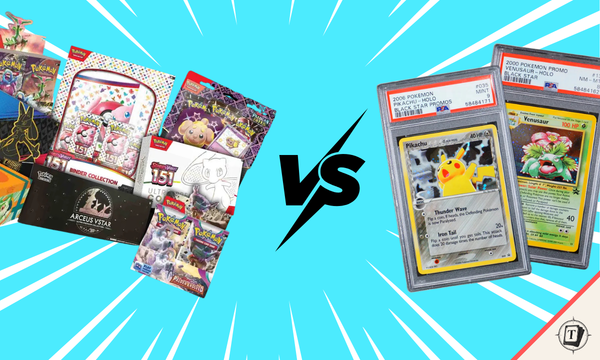
Investing in Singles… individual high-value cards, is a surgical strike. You are betting on a specific character (unless it’s a particular dragon), a specific rarity, or a specific piece of art. Investing in Sealed Product, booster boxes, sets, and special collections is a broad-market play. While the “Singles” investor looks for the breakout star, the “Sealed” investor relies on the most powerful force in the hobby: Supply Destruction.
Here is the financial breakdown of which strategy deserves your capital.
1. The Power of Supply Destruction
The primary reason sealed product (specifically Booster Boxes) appreciates so reliably is that the product is designed to be destroyed. Every day, thousands of boxes are opened by collectors, “rippers,” and influencers. As the total “population” of sealed boxes dwindles, the remaining supply becomes a rare collectible in its own right.
A sealed box contains the “Premium of Potential.” As long as the box remains shut, it contains the possibility of a Gem Mint chase card. Once it is opened, that potential is gone, usually replaced by singles worth 40% of the box’s purchase price. For the long-term investor, the box is a “time capsule.” You aren’t just selling the cards inside; you are selling the opportunity for someone else to experience the set’s history. This “fun premium” creates a price floor that individual cards rarely enjoy.
2. Singles: High Ceiling, Low Floor
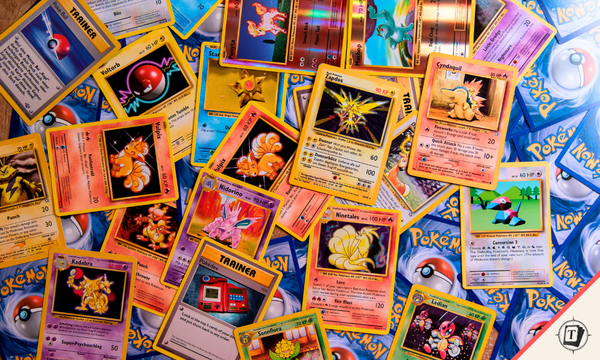
Investing in singles allows for massive, explosive growth that sealed product can rarely match. If you identified the potential of “Special Illustration Rares” early and bought in at the bottom, you may have seen 300% or 400% returns in a single year. Singles are easier to store, easier to ship, and allow you to diversify across different games and eras with less capital.
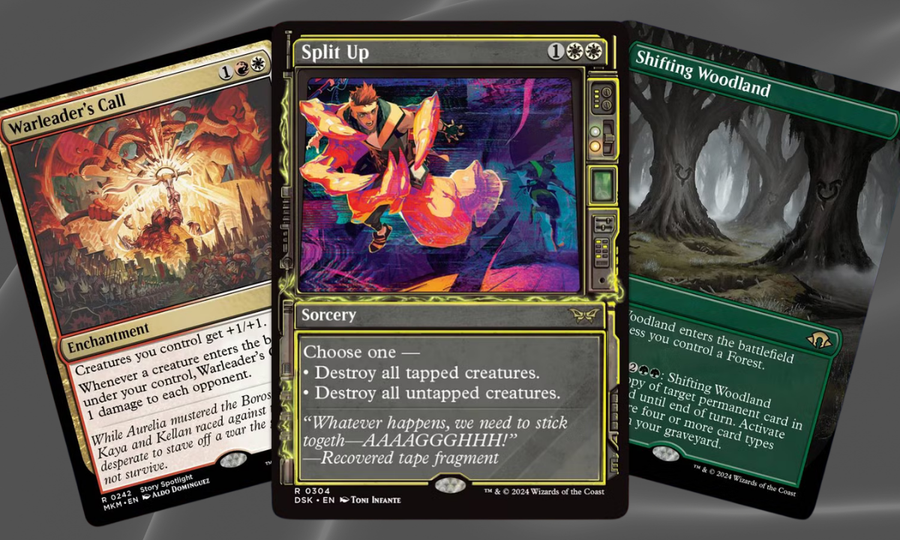
However, singles are highly vulnerable to two market-killers: Reprints and Meta-Shifts. In games like Yu-Gi-Oh! or Magic: The Gathering, a card can be the “hottest” asset in the world until a reprint is announced in a budget-friendly “Mega-Tin” or “Master Set.” Overnight, the value can plummet 80%. Sealed product is naturally hedged against this; even if a specific card in the set is reprinted, the original box remains a historical artifact with its own separate value.
3. The Logistics of the “Space Tax”
One of the most overlooked factors in TCG ROI is the cost of storage and logistics. A $10,000 portfolio of high-end singles can fit into a single fireproof safe or a small safety deposit box. A $10,000 portfolio of sealed booster boxes requires several heavy-duty shelves, a climate-controlled environment, and significant physical security.
Furthermore, the “shipping spread” eats into sealed profits. Shipping a single card costs a few dollars and can be done in a bubble mailer. Shipping a case of booster boxes requires heavy-duty boxes, significant padding, and high insurance costs. When it comes time to exit your position, the “Sealed” investor often loses 10-15% more of their profit to logistics than the “Singles” investor. At a high level, this is what we call the “Space Tax.”
4. The Exit Strategy: Liquidity vs. Velocity
When you are ready to sell, the two strategies behave very differently. High-end singles have High Velocity. A Charizard or a Black Lotus will sell within minutes if priced correctly because there is always a buyer looking for that specific “trophy.”
Sealed product has High Liquidity but lower velocity for larger positions. While there is always a market for booster boxes, selling a “Case” (6 boxes) can take longer and requires finding a buyer with significantly more capital. However, sealed product is often easier to sell “to the trade.” Most local game stores or large-scale vendors will buy sealed product at a higher percentage of market value than they will for singles, simply because sealed product is easier for them to verify and resell.
5. The Winner: The “70/30” Balanced Play
If you are looking for pure, low-stress appreciation, Sealed is the winner. It is the “S&P 500” of the trading card world. It is boring, it takes up space, but its historical performance over a 10-year horizon is remarkably consistent.
If you are an active market participant with the ability to spot trends and the discipline to sell into the hype, Singles offer the higher ROI. But you must be willing to put in the work. You have to watch the reprint calendars, the tournament results, and the population reports.
The most successful portfolios we see are built on a 70/30 split: 70% in sealed booster boxes from high-demand eras (the “Anchor”) and 30% in high-grade, “Blue Chip” singles (the “Engine”). This protects you from market crashes while allowing you to benefit from the explosive growth of individual chase cards.
The Bottom Line: Don’t let the “itch” to open packs destroy your ROI. If you buy a box to invest, put it in a protective acrylic case and hide it. If you can’t resist the urge to open it, you aren’t an investor, you’re a customer.
Disclaimer: The TCG Times is a news and educational platform. All content provided is for informational purposes only and should not be construed as professional financial advice. Trading cards are high-risk, volatile assets. Past performance is not indicative of future results. Always perform your own due diligence before making any financial decisions.