
The transition from “collector” to “investor” is a psychological hurdle that many never clear. Most people entering the trading card market are operating on emotion; they buy what they like, when they see it, at whatever price the market demands. In any other asset class stocks, real estate, or gold, that strategy is called “gambling.”
If you want to treat TCGs as a legitimate part of your wealth-building strategy, you have to stop thinking like a fan and start thinking like a fund manager. The market doesn’t care about your childhood memories. It cares about supply, demand, and liquidity. Here is the blueprint for building a foundation that actually holds value over the long term.
1. The Rule of Entry Price: Controlling the “Buy-In”
The most common mistake in TCG finance is the “Hype-Buy.” When a new set drops—whether it’s the latest Pokémon expansion or a Magic: The Gathering “Universes Beyond” release prices are artificially inflated by FOMO (Fear Of Missing Out). The first two weeks of a set’s life are a period of price discovery, often characterized by “Moon-shots” that are unsustainable.
You don’t make your profit when you sell; you make it when you buy. The professional play is to identify the “Floor”—the point at which the initial hype has died down, the market is saturated with supply from “box breakers,” and sellers are underbidding each other to recoup their capital. Usually, this happens 3 to 6 months after a set’s release. If a card’s price graph looks like a steep mountain peak, you’re too late. You are looking for the plateau, the flat line where the “weak hands” have exited and the price has stabilised.
2. Identifying “Blue Chip” Assets: Stability Over Speculation
Every market has its gold standards. These are assets that have survived multiple market cycles, economic downturns, and shifts in the “meta-game.” A disciplined portfolio should be weighted heavily toward these “Blue Chips”—assets with a proven track record of long-term appreciation.
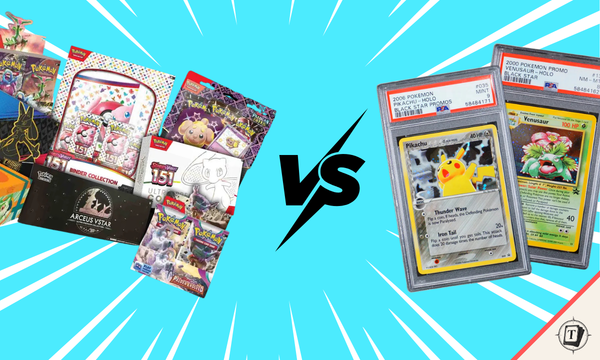
- Pokémon: The focus here is on “Vintage” (1996-2003) and specific high-end modern “Alt-Arts.” A Base Set 1st Edition Charizard is a Blue Chip; a modern “VMAX” card printed in the millions is a speculation.
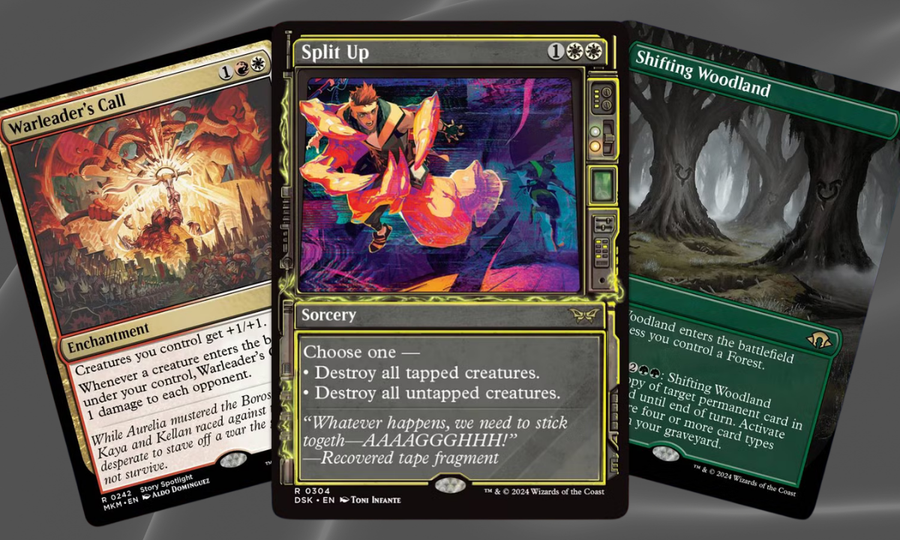
- Magic: The Gathering: The “Reserved List” remains the ultimate hedge. These are cards Wizards of the Coast has legally promised never to reprint. When supply is fixed and demand is eternal, the price only has one long-term direction.
- Yu-Gi-Oh!: This market is trickier due to frequent reprints. Investors here find safety in “Max Rarity”—Starlight Rares, Quarter Century Secret Rares, and the original 2002 LOB 1st Edition printings.
As a rule of thumb, your portfolio should be 70% Blue Chips to provide a safety net, leaving 30% for higher-risk “Spec” plays where you bet on future demand.
3. The Liquidity Trap: Market Value vs. Cash in Hand
One of the most dangerous illusions in the TCG world is “Paper Wealth.” On paper, your collection might be worth $10,000 based on “Market Price” averages. However, if that value is spread across 5,000 different $2 cards, your actual liquidity is near zero. You cannot easily exit a $10,000 position made of bulk.
High-level investors prioritize High-Velocity Assets. These are cards that, if listed on eBay or TCGPlayer at a 5% discount, would sell within an hour. Before you acquire an asset, you must calculate the “Spread”—the difference between what it’s worth and what you will actually receive after 13% platform fees, shipping costs, and insurance. If you can’t turn an asset into cash within 48 hours, you don’t own an investment; you own a hobby piece.
4. Grading: The Multiplier and the “Pop Report”
Grading through PSA, BGS, or CGC is essentially a third-party audit of your asset’s condition. In the TCG market, condition is everything. A PSA 10 “Gem Mint” copy of a card can command a 500% premium over a “Near Mint” raw copy. However, grading is not a guaranteed money printer.
The professional investor lives and dies by the Population Report. If you are holding a card that has 10,000 “Gem Mint 10” copies in existence, that card is a commodity, not a rarity. The real value is found in “Low-Pop” cards—where the demand far outweighs the number of high-grade copies available. Furthermore, you must account for the “Opportunity Cost” of grading. If your card is stuck at a grading company for six months, that is capital that is “locked,” preventing you from pivoting if the market shifts.
5. Sealed vs. Singles: The Diversification Strategy
This is the oldest debate in the game. Singles are surgical strikes you are betting on a specific card, a specific character, or a specific artist. Sealed product (Booster Boxes, Elite Trainer Boxes) is a broad market bet.
Historically, sealed product is the “safer” long-term play. Why? Because every day, people open boxes. As the “sealed” supply is destroyed by collectors and influencers, the remaining boxes become exponentially rarer. However, sealed product presents a logistics challenge: it requires climate-controlled storage and costs significantly more to ship. A balanced portfolio utilizes both: Singles for high-growth “explosions” and Sealed for steady, reliable “compounding” value.
The 5-Year Outlook: Patience is a Stat
The “flippers” who try to make $20 on a pre-order usually end up losing it all on the next market correction. The real wealth in the TCG space is built by those who can ignore the weekly noise. The market moves in cycles; there are “dead zones” where prices stagnant and “bull runs” where everything triples.
The Bottom Line: Stop watching the “influencer” hype and start watching the data. Use tools like our Collection Value Estimators (Pokemon, Yu-Gi-Oh, MTG) to track the actual trajectory of your assets. If the math doesn’t support the move, don’t make it. In this game, the person who can stay rational the longest always wins.
Disclaimer: The TCG Times is a news and educational platform. All content provided is for informational purposes only and should not be construed as professional financial advice. Trading cards are high-risk, volatile assets. Past performance is not indicative of future results. Always perform your own due diligence before making any financial decisions.