Disclosure: This post may contain affiliate links. If you make a purchase through one of these links, The TCG Times may earn a small commission at no extra cost to you.
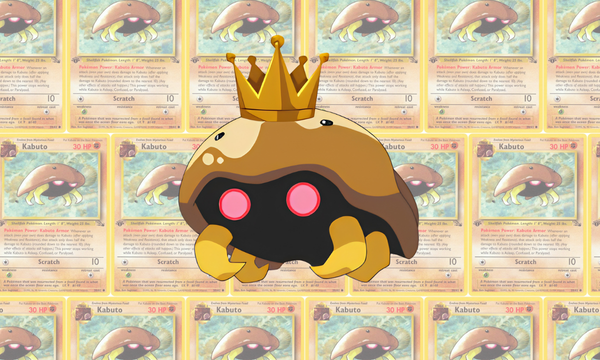
In the TCG market history, few stories resonate with such a unique blend of dedication and sheer audacity as that of “The Kabuto King.” For those unfamiliar with the legend, we’re talking about a collector who, years ago, embarked on an almost impossible quest… The Goal? To acquire every single First Edition Kabuto card from the Pokémon Fossil set. This wasn’t a chase vard by any means, it was a humble common card, largely ignored by collectors (us included). Yet, through relentless effort, he gained over 5,000 copies, effectively cornering the market on a specific, seemingly insignificant card. Here at The TCG Times, we’ve watched his story unfold, culminating in a once-dollar-bin card achieving unprecedented value.
The question for many investors now is: Could this be redone in 2026? Could someone else become the next “Kabuto King” by targeting another forgotten common card and driving its price to unforeseen heights?
The short answer, for anyone looking to replicate this specific market masterstroke, is a resounding NO. Unless you possess an almost unlimited funds (and time) to bankroll such a venture, and even then, that capital would likely be far better spent on other, more traditional investment opportunities within the TCG market.
The Rise of a Forgotten Common: A Case Study in Market Manipulation (and Fun!)
When we were looking into the topic, the sheer impact of “The Kabuto King” became undeniable. A card that was once worth a couple of dollars at most, if anything, hit an all-time high of nearly $22 ungraded in February of this year. Even now, you can find them listed on eBay for $10-20. This individual truly changed the game, not through speculation on a rare, but by demonstrating the power of artificial scarcity applied to a common.
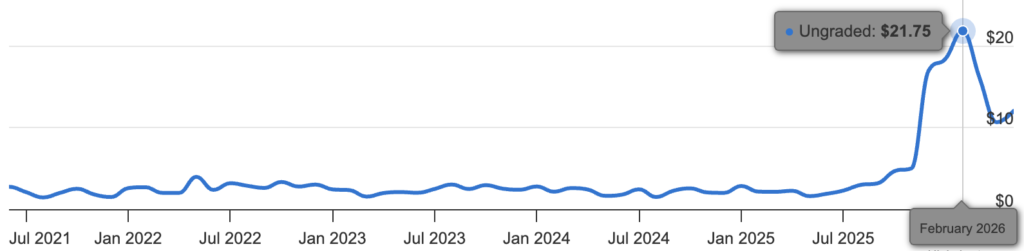
Image from Pricecharting.com
His success, naturally, spawned a multitude of copycats. Investors, seeing the Kabuto King’s unique achievement, tried to do the same. The idea of picking one common card and literally trying to “catch ’em all” became a tempting pursuit. We ourselves at The TGC Times even gave it a crack with other First Edition Jungle and Base Set cards. However, we quickly realised… it is far too late.
The irony of the Kabuto King’s fame is that it created a ripple effect. So many aspiring “kings” and “queens” began trying to select single common cards and buy them out that it has inadvertently hiked the price of older common cards even more! What was once a forgotten piece of cardboard, perhaps worth pennies, is now often a dollar or two (or more, depending on where you are based) simply due to the potential of someone attempting a bulk buyout.
For older collectors who still have their childhood collections gathering dust in binders, this is a convenient portfolio bump. Those forgotten commons, once considered worthless, now carry a surprising amount of collective value thanks to this phenomenon. However, for people trying to master-set the originals, to truly “catch ’em all” for their own collections, well, good luck…. The once cheap filler cards are now significantly harder and more expensive to acquire in bulk. But for the people who have them already, it’s happy days.
The Untapped Potential: What if the King Plays Another Hand?
The story of the Kabuto King also raises a fascinating, albeit purely hypothetical, question for investors. With over 5,000 First Edition Kabutos in his personal collection, he possesses an almost unprecedented level of market influence over a single card. How could “The Kabuto King” rise the price even more?
Imagine this: What if he decided to shred or burn 4,990 of his Kabutos (we feel bad for the little guys just thinking about it), leaving himself with only 10? Given that no one truly knows how many of the world’s First Edition Kabutos actually exist, wiping out that many would definitely lift the price of the remaining few astronomically. The scarcity would become legendary (pretty ironic for a common card), transforming those final 10 into true artifacts of TCG history. As investors, we here at The TCG Times can’t lie, such a move, though extreme, would certainly do our portfolios justice if we happened to own one of those remaining few. But it all fairness would also seem like a colossal waste, a destruction of history purely for financial gain, although when it comes to money, anything is possible. That’s a moral choice we leave entirely at that, a fascinating thought experiment rather than a practical recommendation.
The TGC Times’ Outlook: Learn, Don’t Replicate
In conclusion, while “The Kabuto King” remains a legend in the TCG market, his particular “masterstroke” is near impossible to replicate in 2026. The market has changed, awareness of these tactics is high (and still being attempted to this day), and the sheer volume of “copycats” has already inflated the price of the very cards one would need to target.
Instead of trying to be the next Kabuto King, investors should extract the core lessons from his story:
- Understanding Scarcity (Even Artificial): The power of genuine or created scarcity to drive value, regardless of competitive utility.
- The Impact of Story and Narrative: A compelling story can imbue a card with value far beyond its typical market rate, especially when the story gains traction on social media channels.
- Market Awareness: Being an early adopter or identifier of overlooked opportunities.
For those of us here at The TCG Times who have a Kabuto or two tucked away from our childhood collections, this old, long-forgotten-about card is now safely in penny sleeves and top loaders. How times change, right? While you likely won’t be crowned the next King, understanding his reign offers invaluable insights into the unpredictable, fascinating, and often wildly speculative world of TCG investment. And if you see one in a bargin bin, maybe pick it up, who know what may happen…
Disclaimer: The TCG Times is a news and educational platform. All content provided is for informational purposes only and should not be construed as professional financial advice. Trading cards are high-risk, volatile assets. Past performance is not indicative of future results. Always perform your own due diligence before making financial decisions. This article may also contain eBay affiliate links; if you make a purchase through one, The TCG Times may earn a small commission at no extra cost to you.