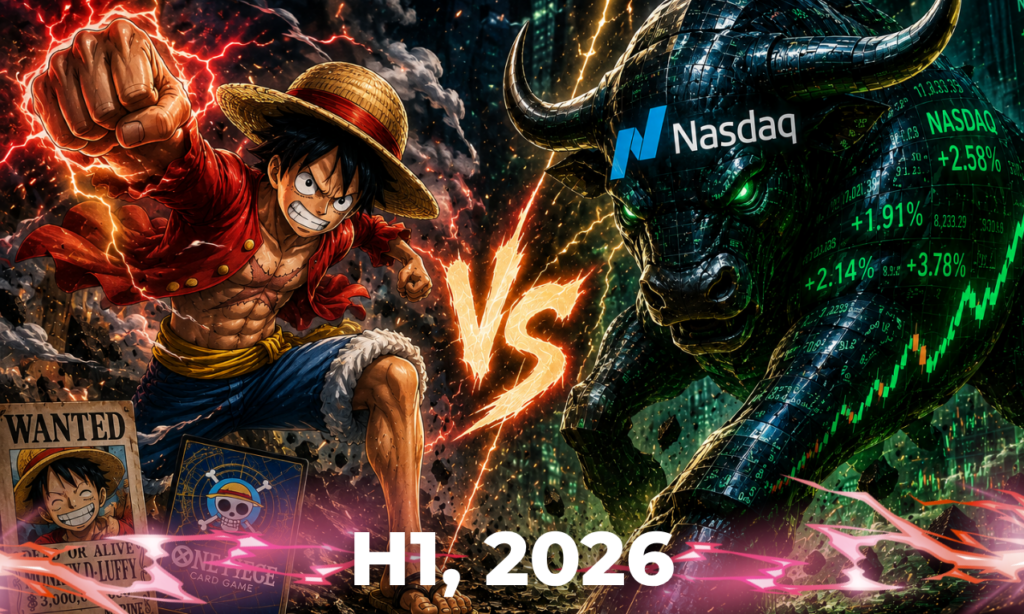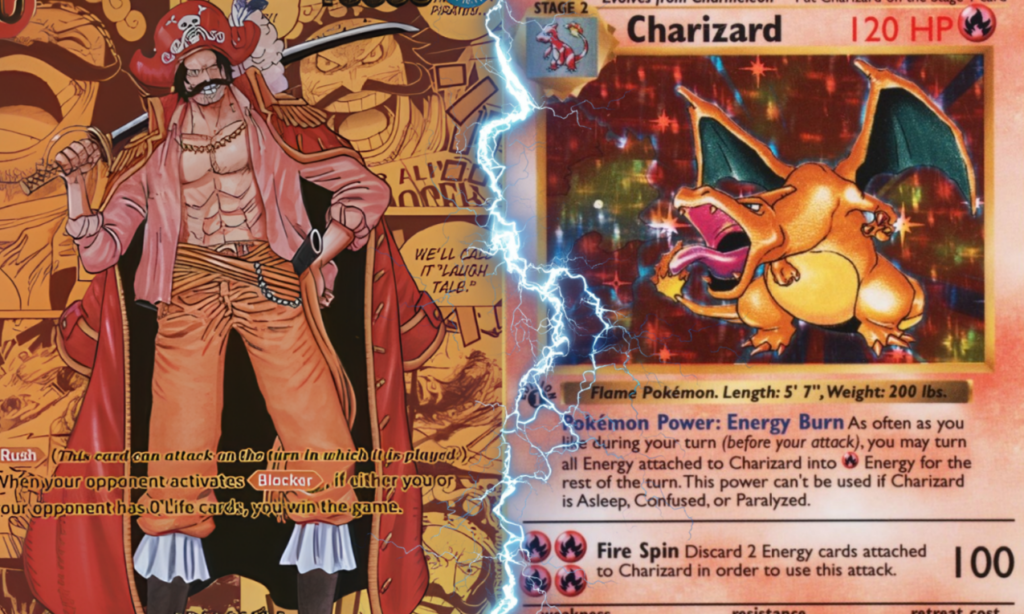
Most One Piece TCG investment content focuses on the cards that already exist, and in all honesty, that makes sense, the Gol D. Roger Gold Super Parallel at $4,982 USD, the Manga Rare Luffy cards commanding four-figure prices, the OP-01 boxes that have gone from $100 USD to $4,000 USD, One Piece TCG beating the stock market. We have covered all of those extensively here at The TCG Times.
This article is doing something different. We are looking forward rather than back… into the future (kinda)! At the characters whose IP weight within the One Piece universe is genuinely massive, but who either do not have a premium card yet or whose card treatment has not yet matched their importance. The logic is straightforward: if you understand which characters should headline a prestige printing based on their role in the story, you can position ahead of the market rather than chasing it after the announcement. And a nice little advantage for One Piece fans who like to collect and invest.
These are forward-looking assessments, not guarantees. Prices for some of these characters on existing standard cards reflect current, non-premium market values. The investment case rests on what happens when Bandai eventually gives them the treatment their IP weight demands.
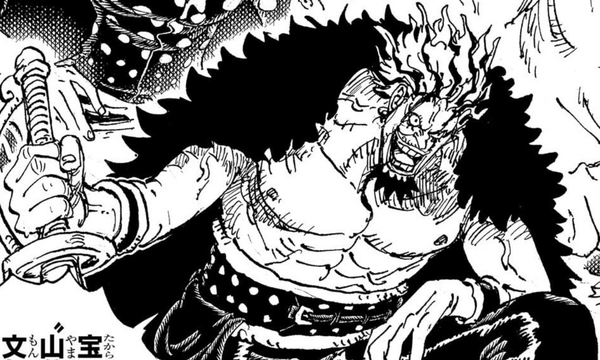
Rocks D. Xebec: The Most Dangerous Name in One Piece History
If you are not caught up on One Piece manga lore, no spoilers here (most of us are still getting through the anime), you are safe, all you need to know for investment purposes is this: Rocks D. Xebec is the most feared pirate in the history of the One Piece world. He was defeated decades before the story begins by a combined effort of Gol D. Roger and Monkey D. Garp, the two most powerful figures in the entire series, and he is still described as a threat so significant that his very name is kept secret by the World Government.
In terms of narrative architecture, Rocks D. Xebec sits at the absolute tippity top of One Piece’s power hierarchy. He predates Roger. He preceded the current world order. A true OG. Every major character whose backstory reaches back far enough eventually connects to him. As the manga has pushed deeper into its final arc and Xebec’s legacy has become increasingly central to the story’s conclusion, his cultural weight within the One Piece community has grown a lot.
The investment case for Rocks D. Xebec is, in our view, one of the most compelling forward-looking character plays in the One Piece TCG. He does not yet have a Manga Rare or premium God Rare treatment. When he does, and the narrative momentum of the manga makes this a question of when, not if, the combination of character weight, collector excitement, and story culmination timing could produce the kind of launch premium we described in our piece on how to spot a TCG price spike before it happens. The IP groundwork is already laid. The card is still coming.
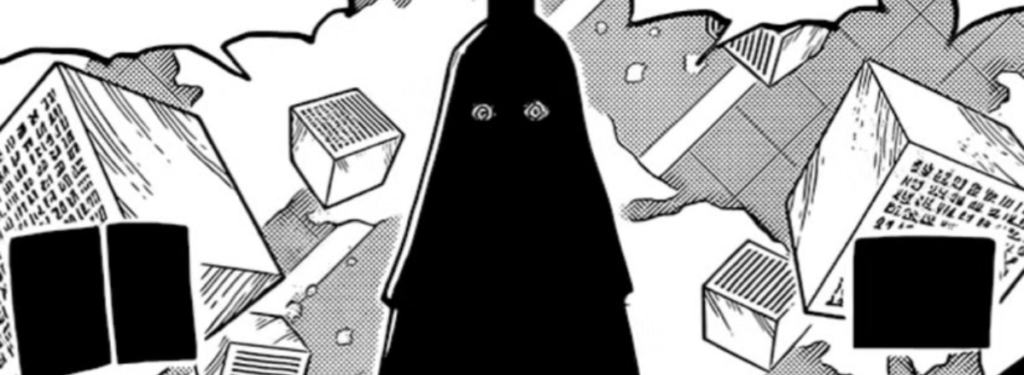
Im-Sama: The Most Mysterious Character in the Manga And That Secrecy Has Real Value
Im-Sama is the hidden ruler of the World Government. The most powerful figure in One Piece, operating entirely in the shadows, whose existence is known to almost no one within the story’s world. As of 2026, the One Piece manga is in the process of revealing Im-Sama’s true nature and abilities for the first time, a narrative event that most of the fandom has been building toward for years.
From a card market perspective, Im-Sama represents something genuinely unusual: a character whose collector demand is being actively built by the manga in real time, right now. (kinda cool) Most character premiums in the TCG are retrospective, they reflect years or decades of established fandom, think Charizard or Dark Magician. Im-Sama’s premium is forming in the present tense, as the story delivers the payoff that has been promised for years.
The structural argument for positioning ahead of Im-Sama’s premium card treatment is based on the same logic that drives every character-driven price spike in this game, character popularity is the single most important value driver in the One Piece TCG secondary market, and Im-Sama’s popularity is at peak levels precisely as the story delivers on its promises. The card that gets printed to match this moment, if it receives Manga Rare or God Rare treatment, it will enter a market where demand has been built by the narrative itself rather than by previous cards.
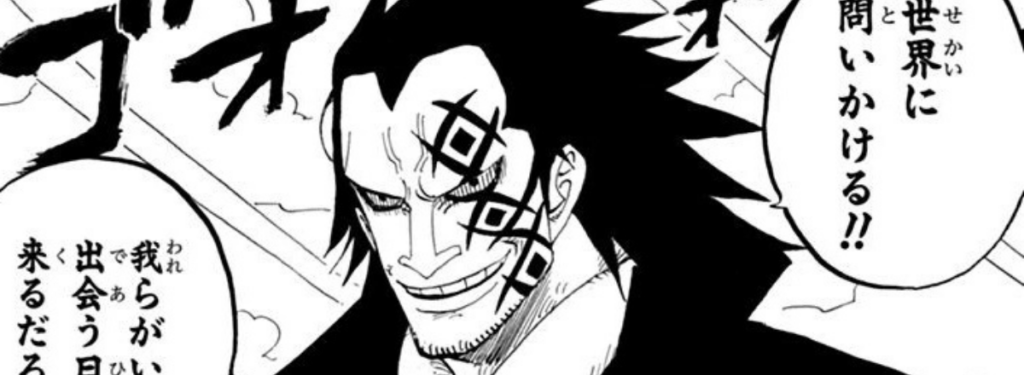
Monkey D. Dragon: The Most Wanted Man in the World Without a Premium Card to Match
Monkey D. Dragon is Luffy’s father, the leader of the Revolutionary Army, and officially the most wanted criminal in the world according to the One Piece narrative. He is one of the few characters whose power level and narrative significance has been consistently referenced throughout the entire series, decades of buildup, with the actual confrontation still ahead. Really keeps ya hanging in there right.
Dragon cards exist in the TCG, the character has appeared across multiple sets. But his premium card treatment has not yet matched his narrative position (no big money card), in our view. For a character described as the World Government’s most dangerous enemy, the secondary market pricing on Dragon’s existing cards remains accessible relative to what we would expect from a character of his story weight. That gap, between narrative importance and current card market price, is where the forward-looking investment case sits.
The One Piece story is moving toward its conclusion. As it does, the characters who have been built up as major powers but have not yet had their defining moments, Dragon among them, are going to get those moments in the manga. Each defining manga moment for a character has historically translated into card market movement. Dragon’s moment, when it comes, is likely to be significant given the buildup surrounding him across 1,000+ chapters of story, and just who is his in the story.

Joy Boy: The Historical Weight That the Whole Story Points Toward
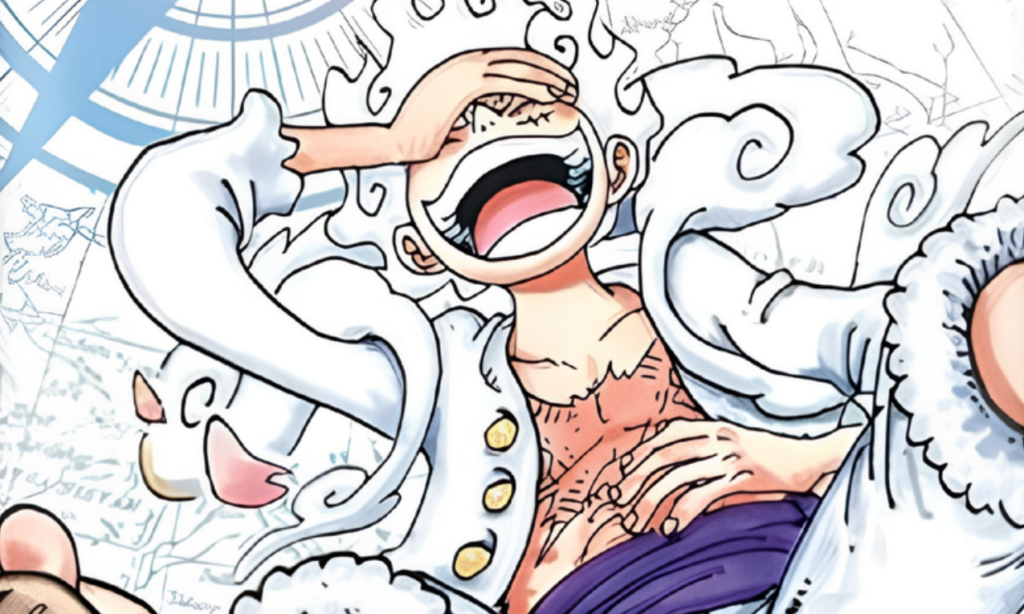
Joy Boy is not a character in the traditional sense (hear us out) he was a figure from hundreds of years before the main story, whose legacy, promises, and failures form the mythological foundation of everything One Piece is building toward. As the story has progressed, Joy Boy’s significance has only grown (obviously). The connection between Joy Boy and Luffy’s own destiny, deliberately hinted at throughout the final arc, makes him one of the most narratively important and exciting figures in the entire series.
A card that gives Joy Boy a dedicated, standalone Manga Rare or premium treatment, rather than appearing as an element within another character’s card, would be entering a market where the IP weight is arguably the deepest in the game, in the most literal sense. This character is not a supporting figure. He is the mythological engine that pretty much the entire story runs on.
The caveat here is timing uncertainty. Joy Boy’s card treatment depends on how Bandai chooses to represent him as the manga reaches its conclusion, and that is not fully predictable. But the investment case rests on IP weight, not timing precision, and on that measure, Joy Boy is at the absolute top of the One Piece universe.
The Framework for All Four: Position on IP Weight, Not Current Card Price
The thread that runs through all four of these characters is that their IP weight within the One Piece universe currently exceeds their card market representation. The gap between how significant a character is in the story and how significantly their cards are priced is the forward-looking investment opportunity (not a guarantee).
This approach is inherently more speculative than buying established Manga Rares with existing price histories, but an exciting exercise. The timing is uncertain, the specific card treatment is unknown, and the market’s reception to each premium printing depends on factors we cannot fully predict. Understand that risk clearly before positioning.
But for investors who believe in the One Piece IP’s long-term strength, and as we covered in our One Piece investment case, there are strong structural reasons to hold that belief, positioning ahead of premium card treatments for these characters is precisely the kind of early-mover advantage that the TCG investment market rewards most generously.
Disclaimer: The TCG Times is a news and educational platform. All content provided is for informational purposes only and should not be construed as professional financial advice. Trading cards are high-risk, volatile assets. Past performance is not indicative of future results. Forward-looking assessments are speculative by nature. Always perform your own due diligence before making any financial decisions.