
Disclosure: This post may contain affiliate links. If you make a purchase through one of these links, The TCG Times may earn a small commission at no extra cost to you.
Here at The TCG Times, we spend a lot of time talking about which cards or sets are worth investing in. But today we are mixing it up and asking the more fundamental question underneath: which characters carry the deepest, most durable investment weight across the first four generations of the Pokémon TCG? Because understanding the character is how you evaluate every card that character appears on, from the vintage holo in a PSA slab to the modern Special Illustration Rare sitting in a binder somewhere. The character is the engine. The card is just the expression of it. This is one for the collectors leaning more into investing and combines them both.
We are running through Generations 1 to 4 and making our case for one character per generation, the one whose combination of rarity, nostalgia, aesthetics, and ongoing demand gives the most compelling long-term investment argument. We are not looking at quick flips in this article. This is our view, backed by the data as we see it, and as always, make sure to do your own research before spending a dollar.
Generation 1 – Charizard: The Market Has Spoken, and the Data Agrees
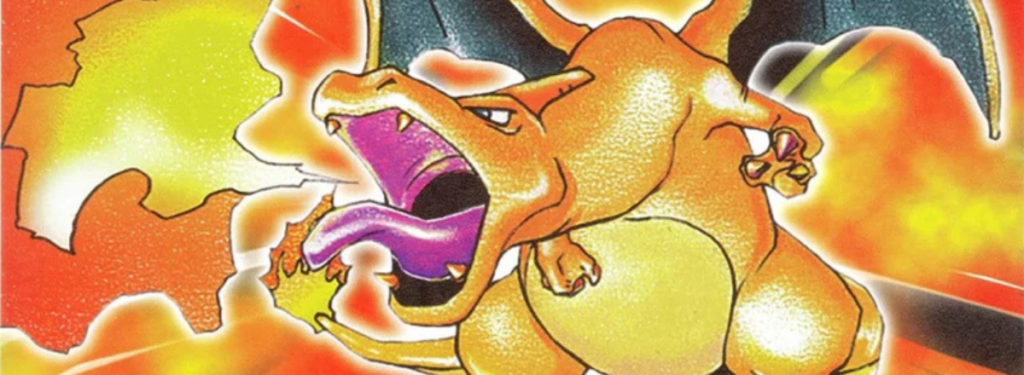
Yeah, yeah, yeah, we know. Everyone says Charizard. And precisely because everyone says Charizard, a reasonable investor might wonder whether that consensus means the opportunity is already priced in. Our answer: not for high-grade vintage copies, and probably not for a long time.
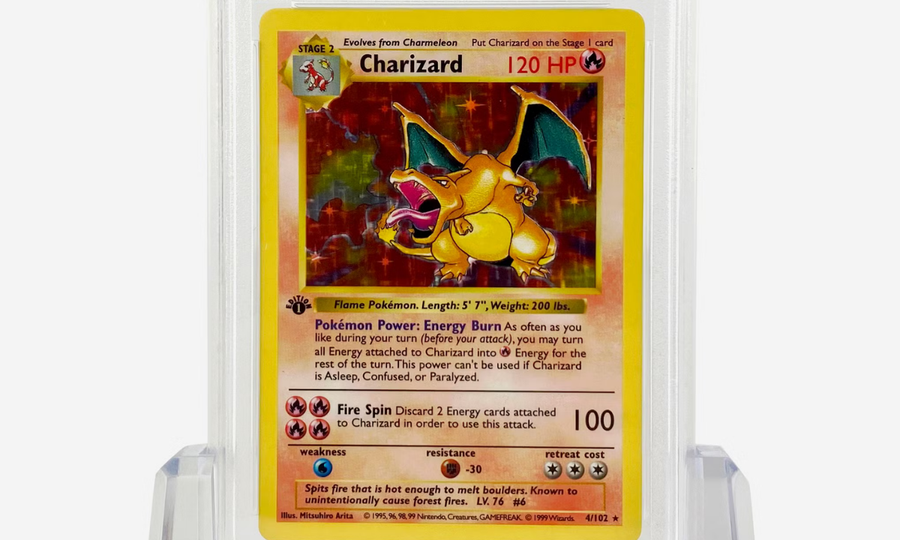
The investment case for Charizard is, in our view, the strongest of any character in the entire hobby, not just Generation 1. A PSA 10 First Edition Shadowless Charizard sold for $550,000 USD at Heritage Auctions in December 2025, then a Shadowless variant hit $954,800 USD at Goldin in February 2026. Current 2026 comps for PSA 10 First Edition Shadowless copies sit at $456,000-$528,000 USD. Even a raw, unlimited Charizard averages around $458 USD on TCGPlayer. The price ladder on this card, from raw unlimited to PSA 10 First Edition, spans five orders of magnitude, and every rung on that ladder has an active buyer market.
What sets Charizard apart from every other character in Generation 1, and arguably in the entire game, is the combination of narrative weight and cultural crossover that no other card has replicated. You do not need to know anything about the Pokémon TCG to know what a Charizard is worth, Charizard is “mainstream”. That crossover recognition, the kind that attracts buyers who have never played the game in their lives (and probably never will play it, let’s be honest) is the rarest possible value driver in this market, and it is the one that drives prices to levels that pure collector demand alone cannot reach. We aren’t just talking about first edition, most Charizard, if not all Charizard cards, are destined to rise in price, from the common to the alt arts.
The secondary mention for Generation 1: do not sleep on Gengar. A First Edition Fossil Gengar repriced from approximately $1,800 USD in 2021 to a $48,000 USD PSA 10 sale in May 2026. That is not an accident or a random spike of hype, it reflects a genuine recognition that Ghost-type nostalgia from the original era is significantly undervalued relative to Fire-type equivalents with the same print run scarcity. No doubt you know someone whose favourite Pokémon is Gengar!
Generation 2 – Lugia: Thin Supply, Enormous IP Weight, and a Floor That Holds
Generation 2 has two massive contenders and we are going to be direct about both before making our call. Umbreon, particularly the modern Moonbreon era cards, has performed far better then its counterparts (eveelutions). The Gold Star Umbreon PSA 10 hit $168,000 USD in June 2026, a record for the card, while the Evolving Skies VMAX Alternate Art PSA 10 trades around $3,150-$4,680 USD with 449% long-term appreciation documented. Umbreon’s case is actually excellent and we have covered it at length in The Moonbreon Paradox. But Umbreon ain’t the top dog…
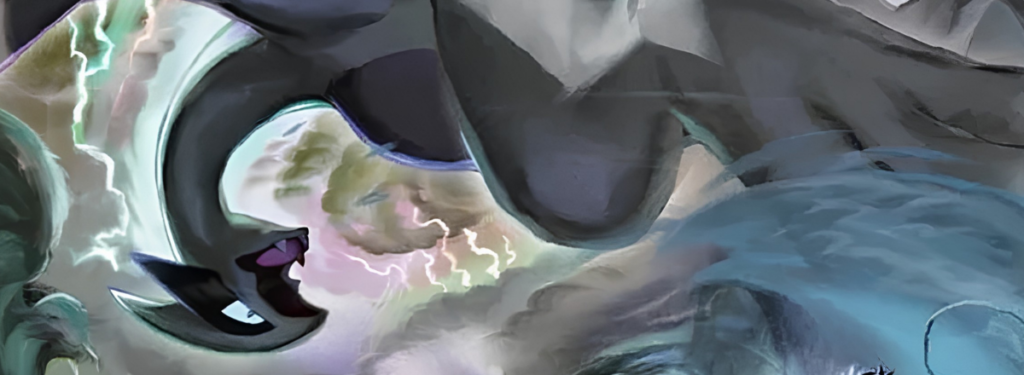
Our Generation 2 investment case is for Lugia, specifically the Neo Genesis printing. Here is why.
The Neo Genesis Lugia PSA 10 holds at approximately $45,000 USD in 2026, but the critical detail is the float (pop), there are extremely few PSA 10 copies of this card in existence, and the thin supply means each individual sale is a meaningful price-setting event rather than a routine transaction in a liquid market, each sale isn’t the benchmark, it’s setting the benchmark. Neo Genesis was somewhat for poor print quality, cards consistently exhibit heavy holo damage and centering issues that make genuine PSA 10 copies extraordinarily rare survivors. With Neo Genesis being vintage, most of the Lugias from that set probably went through the wash or were heavily played with, as no-one knew it would be worth so much in today’s market. The scarcity is not manufactured. It is structural and permanent.
Lugia also carries a narrative weight that extends well beyond the trading card game, as the centerpiece of Pokémon 2000 for an entire generation of collectors now in their early-to-mid thirties, its nostalgic anchor is different in kind from most Generation 2 characters. And every time the modern game features a new Lugia card, which it does regularly, it re-introduces the character to a new generation of collectors while reinforcing the value of the vintage originals. That feedback loop between modern IP activity and vintage card demand is exactly the mechanism we want to see behind a long-term hold. And there definitely will be more Lugias to come.
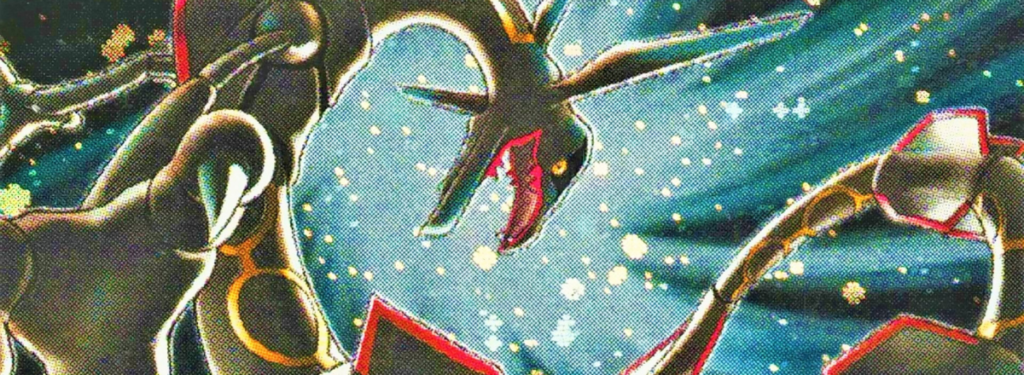
Generation 3 – Rayquaza: Consistent Outperformance Across Every Era It Has Appeared In
We have made this case in detail in our piece on why Delta Reign is worth watching, so we will keep this one sharp. No character/Pokemon in Generation 3, and arguably in the entire modern TCG era, has demonstrated the consistency of investment outperformance that Rayquaza has shown across multiple separate print eras.
The Gold Star Rayquaza PSA 10 sold for $100,000 USD in February 2026, a record for the card and no small feat, that kind of money can buy you a house in some countries. The Evolving Skies VMAX Alternate Art consistently trades at $700-$850 USD raw, comfortably the second most valuable card in a set otherwise dominated by Eeveelutions with identical pull rates. Delta Reign launches November 6, 2026, with Mega Rayquaza ex as the headline card, its first top-billing since the XY era. So you wouldn’t be wrong thinking there will be some big money chasing that hit.
The investment case for Rayquaza is, in our view, is by far the strongest in Generation 3 and the most data-backed of any “non-mascot” character in the game. The pattern of outperforming its own set, regardless of era or mechanic, has now repeated across at least three separate print generations. When a pattern repeats that consistently, it stops looking like coincidence and starts to look like the norm.
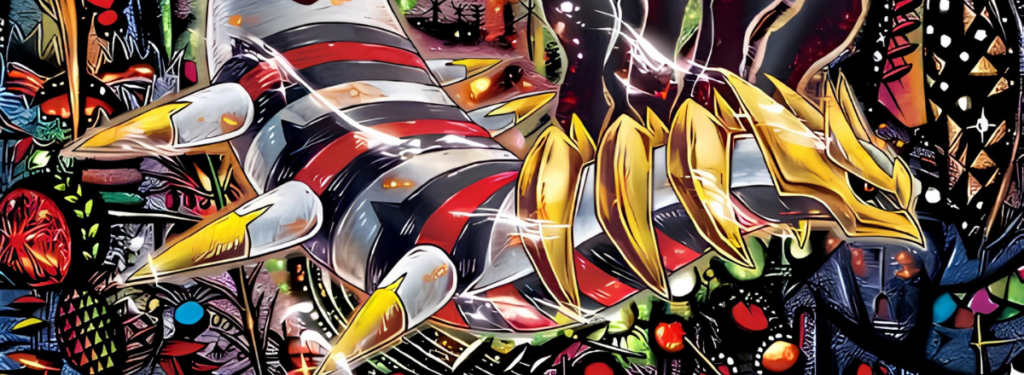
Generation 4 – Giratina: Aesthetic Power, Unique Lore, and a Modern Card Track Record That Warrants Attention
Generation 4 gives us some absolute bangers! Garchomp (strong competitive legacy), Lucario (consistently a fan favourite), and a handful of other characters with real collector/investor resonance. But the character whose investment case we find most compelling from a Four Pillars perspective is Giratina the God of CHAOS!
As the ruler of the Distortion World and one of the most visually striking Legendary Pokémon in the franchise (it’s a favourite here at The TCG Times), Giratina occupies a specific niche that most characters do not, its aesthetic is genuinely different from every other Legendary. It is not a classic dragon in the conventional sense, not a bird, not a beast (kinda) it is something darker and more architecturally complex, (it has a cool and unique design is what we are trying to say) which gives its card artwork a visual distinctiveness that collectors and investors consistently respond to with premium pricing. The card art on Giratina pieces tends to be exceptional, and exceptional artwork is one of the clearest predictor variables for long-term premium retention.
The Lost Origin set Giratina VSTAR and Origin forme cards have shown strong sustained appreciation, and the character’s profile has benefited meaningfully from the Brilliant Diamond and Shining Pearl remakes, which reintroduced the Sinnoh era’s lore to a generation that had not experienced it originally. Additionally, the Arceus game as well. The investment case for Giratina in Generation 4 is, in our view, the strongest combination of aesthetic pillar strength and ongoing IP momentum of any Sinnoh-era character, with a track record on modern cards to support it. PLUS still holds up on that nostalgia element that means so much to value.
The Generation 5-9 Piece
We are stopping at Generation 4 for this article because the vintage scarcity argument, the most durable long-term investment case, applies most clearly to Generations 1-4, where the earliest and thinnest print runs have had the longest time to become genuinely scarce in high grade. We will be covering Generations 5 through 9 in a separate piece, where the conversation shifts more toward modern card performance and character IP trajectory. Watch this space.
Disclaimer: The TCG Times is a news and educational platform. All content provided is for informational purposes only and should not be construed as professional financial advice. Trading cards are high-risk, volatile assets. Past performance is not indicative of future results. Always perform your own due diligence before making any financial decisions.