Magic: The Gathering is thirty-three years old (chances are, if you’re reading this, you probably are too). In that time it has built one of the most complex and deep universes in the entire tabletop gaming world, a literal multiverse of planes before Marvel was doing it in movies. Bringing characters, ancient wars, and civilisational conflicts that span thousands of cards and decades of storytelling. Choosing which characters to collect and invest in from that catalogue is a genuinely different challenge from Pokémon or Yu-Gi-Oh, where chances are you picked up a game or watched a show to find your favourite character.
The key concept to understand before diving in is, in MTG, the most collectible characters are almost always Planeswalkers, the game’s version of major named characters with their own card type, their own distinct card frames, and decades of storyline importance. A Planeswalker card is not just a powerful game piece. It is a portrait of one of Magic’s most significant and well known figures, printed in a format that points towards importance within the game’s structure, similar to One Piece Manga cards in a way. The most valuable Planeswalker cards are almost always specific premium printings of characters with the most ingrained narrative histories and the broadest collector appeal.
Here is our investment case for the three characters we believe carry the strongest long-term collector/investor argument.

Jace Beleren: Magic’s Poster Child and the Investment Case for Iconic Status
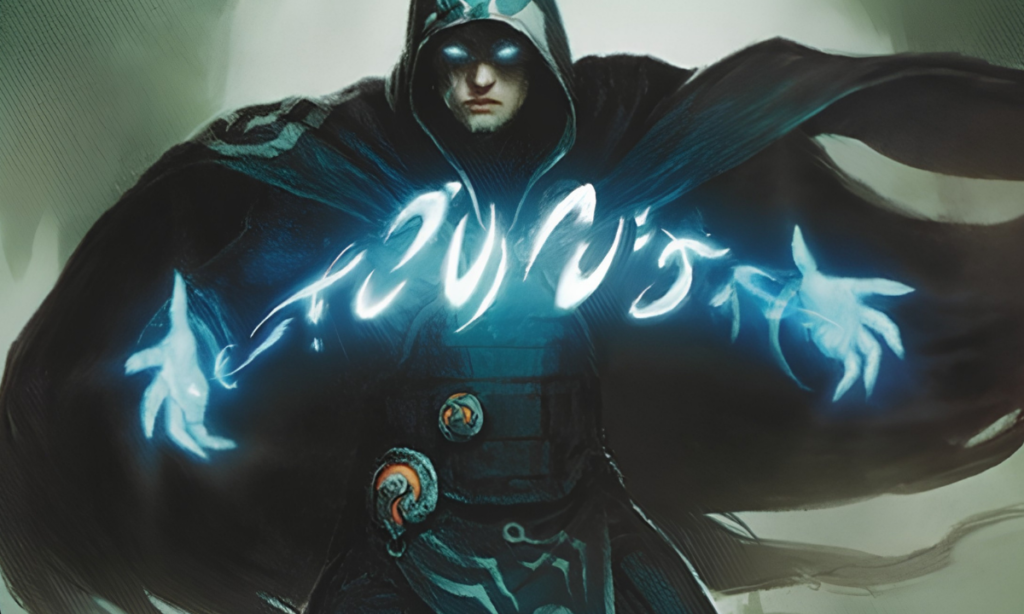
Yeah, no surprises here for the MTG veterans. For the better part of Magic’s modern era, Jace Beleren was/is the face of the game. Not the most powerful character in the lore. Not the most beloved across all player communities. But the character Wizards of the Coast put on the packaging, the promotional material, and the narrative frontline of Magic’s most significant story arcs, good indicators of a fan fav. Jace, the Mind Sculptor, his most famous card, was so powerful it was banned in Modern (the second most competitive constructed format in the game) for years, and is still restricted in Legacy. That ban history is not irrelevant to its value, otherwise, we probably wouldn’t have mentioned it. It is evidence of a card that so fundamentally warped competitive play that the entire format ecosystem had to respond to it.
The investment case for Jace is, in our view, the strongest among Magic’s Planeswalker characters for collectors who want the clearest connection between narrative importance and card market premium and honestly, fun cards to chase. A Pro Tour promo version of Jace, the Mind Sculptor commands a notable premium over the standard printing purely on the basis of its limited availability and iconic status. A Judge promo version similarly commands a premium as a scarce, prestige printing of the game’s most historically relevant competitive card.
The San Diego Comic-Con exclusive black-border version, featuring Jace in an all-black treatment with blue foil detailing, is one of the most visually distinctive versions of any MTG card and sits among the most expensive Planeswalker cards in the game. These SDCC exclusives were produced in extremely limited quantities, are no longer available through any conventional channel, and appeal simultaneously to MTG collectors, gaming memorabilia collectors, and comic convention collectors and INVESTORS! The crossover appeal of that specific product is genuinely unusual in the MTG market.
The risk for Jace specifically, Wizards has reprinted the card text of Jace, the Mind Sculptor multiple times across different sets, which matters for competitive players but does not touch the collector value of the premium printings. This particular character’s value expands far from just playability. The original Worldwake printing, the judge promo, and the SDCC exclusive are distinct collector targets that cannot be diluted by text reprints, so as long as MTG is relevant, those cards will be.

Liliana Vess: The Most Valuable Planeswalker Title and the Collector Case Behind It
The most valuable Planeswalker card in Magic: The Gathering, by documented market data, is the San Diego Comic-Con 2013 exclusive version of Liliana of the Dark Realms. The all-black card with Liliana’s signature purple foil scars is, by widespread collector consensus, one of the best looking individual cards in the game’s entire history. Digital renders do not do it justice in our opinion.
This tells you something important about Liliana as an “investment character”, her collector appeal goes beyond gameplay history and extends into genuine aesthetic prestige in a way that most MTG characters can match. The combination of striking visual design, very limited SDCC availability, and a character who has been narratively central to Magic’s storylines across multiple major storylines(nostalgia, we talk about it all the time!) creates a premium that has an aesthetic basis rather than purely format-driven.
Liliana has been one of the faces of Magic alongside Jace for a very long time, and her narrative arc, from necromancer anti-hero to complex villain to reluctant ally (bit of backstory for the newbies) is among the more developed of any Planeswalker in the game’s lore. That depth of this character’s history creates sustained collector interest across multiple card printings, not just the most expensive versions, which is a great lower barrier to entry.
The artist factor is also worth noting and regularly forgotten about when just looking at the $. A prerelease Japanese alternate art version of Liliana featuring artwork by Yoshitaka Amano, the legendary artist known for creating the visual designs for the Final Fantasy series, has climbed significantly in value based almost entirely on the intersection of Amano’s global artistic reputation and the card’s already strong collector base. This is the aesthetic pillar of card value working at full strength, and the resulting premium is real and documented. Honestly love to see it.
The investment case for Liliana is, in our view, the strongest of any MTG character from a pure collector and aesthetic premium standpoint. The top-end printings are VERY scarce, with beautiful artwork, and sit in a category where collector demand is independent of format relevance.

Nicol Bolas: Magic’s Greatest Villain and the Commander Market That Sustains His Value
Every game needs its great villain. For Magic: The Gathering, that villain is Nicol Bolas, an ancient, godlike Elder Dragon who has been plotting across millennia, conquered entire civilisations, and served as the primary bad guy for the game’s storyline. Bolas predates the Planeswalker system in Magic’s lore. He is older than most of the game’s cosmological structures. He is, within the fiction, one of the most powerful beings in existence, if you hadn’t picked that up yet.
This narrative weight translates directly into a specific type of collector appeal that is kind of different from Jace or Liliana. Nicol Bolas’s most valuable cards are driven significantly by the Commander format, the casual multiplayer format that now accounts for the majority of Magic played globally (50-70%), and where players routinely build entire decks around the most powerful and resonant legendary characters in the game. A Nicol Bolas theme deck is one of the most classic Commander builds in the hobby, which creates sustained, player-driven demand for Bolas cards that does not depend on competitive format viability.
As we covered in detail in our Commander format piece, player demand is more durable than speculative demand precisely because it is driven by actual ongoing use rather than expectation of resale… people actually playing the game!. Bolas collectors and Commander players want these cards to play with and display, which creates a floor that purely speculative buying cannot reliably provide.
The Nicol Bolas, God-Pharaoh version, the peak of the character’s arc in the War of the Spark set, and the original Nicol Bolas, Planeswalker from Conflux both maintain consistent secondary market value not primarily because of competitive relevance, but because of the character’s enduring appeal as Magic’s definitive villain. That villain premium is a durable hold, who doesn’t love a quality bad guy?
The MTG Character Investment Framework
What Jace, Liliana, and Nicol Bolas share is a character depth and narrative history that makes their collector appeal genuinely independent of whatever format is currently dominant. Players rotate through formats but characters endure. The MTG investment concept for characters is: find the figures whose storyline importance spans multiple major arcs, whose premium printings are genuinely scarce (SDCC for example), and whose collector base extends beyond the typical competitive player into the broader community of fans who care about the game’s lore, real fans. Those three characters, in our view, sit at the top of that list for 2026 and beyond.
Disclaimer: The TCG Times is a news and educational platform. All content provided is for informational purposes only and should not be construed as professional financial advice. Trading cards are high-risk, volatile assets. Past performance is not indicative of future results. Always perform your own due diligence before making any financial decisions.