Disclosure: This post may contain affiliate links. If you make a purchase through one of these links, The TCG Times may earn a small commission at no extra cost to you.
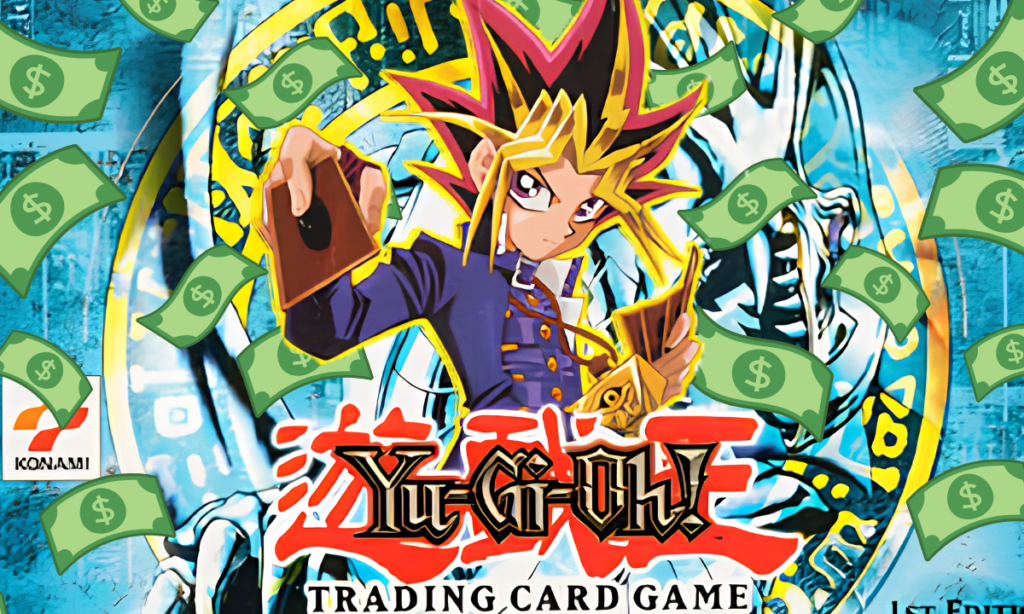
Before we dig into this, let’s do a quick exercise, imagine it’s 2002. You’re ripping open a Legend of Blue-Eyes White Dragon pack in a newsagent/game store/where ever you bought cards as a kid, and you pull a Blue-Eyes White Dragon from the pack. The only thing that comes to mind is “sick, I can use this in my deck” OR “This is awesome, I’m going to put it in my binder” This was generally something that used to happen, yes, it was still a big deal, but it wasn’t about the money…. NOW IT IS! If that card survived the years of abuse we used to give to our cards and was somehow in near-mint condition, it is now worth a small fortune. Seriously, potentially thousands of dollars even with that in mind, the original Yu-Gi-Oh era remains one of the most underrated investment categories in the TCG space.
Here at The TCG Times, we believe the times are changing in terms of Yu-Gi-Oh investments, and the collectors/fans and the players who actually have the biggest edge in investing in our opinion. And the ones who already are, or are currently looking at, the original era’s investment case will probably be telling this story with a smile and a big wallet in five years. Let’s get into it.
Why the Original Era Is Genuinely Scarce
Quick flashback… English Yu-Gi-Oh TCG launched in July 2002 with the now iconic Legend of Blue-Eyes White Dragon set. The quickly followed by the sets Metal Raiders, Spell Ruler, Pharaoh’s Servant, and some other foundational sets that ceimented Yu-Gi-Ohs first 2 years in the TCG world. Now in 2026, these sets are obviously over two decades old (feeling old yet? we are). The initial investment concept is the same as vintage WOTC-era Pokémon cards so compelling, and exactly like their Pokémon rival, they were printed for a player market that had no idea the player based and TCG’s as a whole, would be so dominant in 2026.
Just like the Pokemon TCG, the big investment is of course that juicy 1st Edition stamp. Yu-Gi-Oh TCG 1st Edition sets were printed in fairly smaller quantities compared to Unlimited and other sets that followed. The 1st Edition stamp is shown in the lower left of the card, and that stamp alone automatically commands a premium price over Unlimited copies of the exact same card. This happens at the PSA 10 versions, where the scarcity drives the price even higher because these cards are now 20+ years old and finding a pristine raw example is nearly impossible.
Let’s break the numbers down a little, a PSA 10 LOB 1st Edition Dark Magician sold for $17,924 USD in July 2021, and since then the prices have only appreciated in value. Another example is the Grand Master Rare Blue-Eyes White Dragon, which have now crossed $44,000 USD at auction. These aren’t random spikes in the market, this is the market catching up and correctly pricing two decades of finite supply of cards that cannot be recreated.

The Investment Hierarchy: What to Focus On
We need to be clear that not everything from the original era is equally compelling, and we want to be straight up and fair with you about that rather than just telling you “old = good.” Here is how we think about the hierarchy of the earlier edition Yu-Gi-Oh cards.
Now, clearly the 1st Edition PSA 10 copies of major character cards from LOB are the holy grail in terms of Yu-Gi-Oh cards, think about Blue-Eyes White Dragon, Dark Magician, Exodia pieces the card people that don’t collect Yu-Gi-Oh probably know about. Consider this the Yu-Gi-Oh versions of a Base Set Charizard in investment terms, characters/cards driven by nostalgia, backed by a whole generation who watched the anime before school every single morning. These hits are all now scarce in genuine gem mint condition due to age and backed by the safety of zero reprint risk. As we covered in our piece on the best Yu-Gi-Oh characters to collect, the demand for these characters at the premium level is genuine rather than speculative.
LOB (Legend of Blue Eyes White Dragon)is the set to focus on first not much else to say there. It is the OG Yu-Gi-Oh, it could be considered the One Piece OP-01 of Yu-Gi-Oh, plus it carries the IP weight of a majorly loved series as well. But of course the buy in can be fairly high, so we should mention Metal Raiders and Pharaoh’s Servant have their own investment cases (Raigeki, Monster Reborn, and other iconic spell cards live here), but still they are secondary to the set that kicked it all off.
When it comes to Unlimited copies at lower grades are possibly not even worth looking at, but it’s good to understand why. If you are considering purchasing an Unlimited LOB Blue-Eyes in NM condition, often newbies would think Vintage Yu-Gi-Oh, must be worth the big bucks! This actually isnat actually the case; the Unlimited print runs were much larger, and they aren’t actually 1st edition, and the scarcity argument really just isn’t there.
The Nostalgia Wave Is Just Arriving
This is often something that gets brushed over but it honestly has merit. The kids who were ripping LOB packs in 2002-2003 are now in their early-to-mid 30s. This is the prime collector demographic, and according to our own analytics, its probly you reading this right now… adults with real jobs and disposable income. This is the exact same wave of people that drove Base Set Pokémon to astronomical prices over the past decade, is now standing at the gates of the Yu-Gi-Oh market.
This isn’t speculation either, thge dtat doesnt lie. Already in the first half of 2026 multiple original era cards saw buyout activity and prices go up. And what caused this surge in activity? It was driven by collectors as opposed to the usually competitive players Yu-Gi-Oh’s market has usually relied on. And when looking at the cards, this is happening to us makes sense Dark Magician, original Blue-Eyes printings, Exodia pieces, etc all the big names that are always crucial to the competitive scene. This is the generation reliving their childhood, and the best part for you reading this as a TCG investor it is still relatively early in that curve.
The Condition Warning: This Category Requires Care
We would be doing you a disservice if we did not flag this part. PSA 10 examples from this era are very rare, especially considering that they were played with before TCGs became a billion-dollar market and Yu-Gi-Oh’s original card quality was less consistent compared to what we are used to with modern printing. Additionally, authentication is also becoming more of a genuine concern as more sophisticated fakes are popping up.
As always, you suggest buying graded from reputable sources at meaningful price points. The risks for a raw copy that turns out to be a fake or sending cards of theis era to be graded and they come back below expectations is real. As we covered in our grading cluster, in the current market PSA is the right company for these cards given the market’s familiarity.
The TCG Times’ Verdict: Yes, With Precision and a Plan
The concept is fairly simple when broken down. The original Yu-Gi-Oh era, specifically 1st Edition LOB and the other early iconic sets combined with PSA 9-10, focused on the major character cards/characters tells a very compelling investment story in 2026. Obviously, the vintage scarcity is real, the nostalgia wave is coming and the current price gap between where these cards sit today and Pokémon WOTC-era cards trade for suggests there is a meaningful jump in value soon to come.
The precision matters, though, let us explain. Aside from the concept and cards suggested above, pretty much everything else is a far weaker investment. You should always know what you are buying into and have a reason why before you spend a dollar. (And if you are still one of the lucky few with a binder from your childhood, have a look for that Blue-Eyes raw in a binder from 2002, it might just be worth a small fortune.)
Disclaimer: The TCG Times is a news and educational platform. All content provided is for informational purposes only and should not be construed as professional financial advice. Trading cards are high-risk, volatile assets. Past performance is not indicative of future results. Always perform your own due diligence before making financial decisions. This article may also contain eBay affiliate links; if you make a purchase through one, The TCG Times may earn a small commission at no extra cost to you.