Every TCG investor eventually learns the same uncomfortable lesson: the company printing your cards has the power to make your investment worth significantly less, at any time, with a single business decision. Not through malice, not through some grand conspiracy, but through the most mundane corporate logic imaginable, they printed more product to meet demand, and demand was met, and then some. Your investment dropped they wallets got filled, it’s business. We call this the $2 pack problem, and here at The TCG Times, we think it deserves a clear-eyed breakdown, because it is one of the single biggest risks every investor in this hobby is exposed to, whether they realise it or not. For the casual collector is a blessing.
The Core Mechanic: Publishers Are Not Your Partners
This is the uncomfortable starting point. Konami, Wizards of the Coast, and The Pokémon Company are not in the business of protecting your portfolio’s value (they do not care if your collection goes up or down for the most part). They are in the business of selling product, and their primary incentive is to meet demand profitably, not to preserve secondary market scarcity for collectors and investors, although we have no doubt they do consider it in some cases. When a set sells out instantly, and scalpers are flipping packs at three times retail, the publisher sees two things: lost potential revenue AND an opportunity. The natural response, almost every time, is to print more. They like money as much as we do!
This is not a flaw in the system. It is the system working exactly as designed from the publisher’s perspective. The disconnect is that what is rational for the publisher is frequently the worst possible outcome for the investor holding sealed product or singles from that same release.
Pokémon: The 2022 Oversupply Lesson
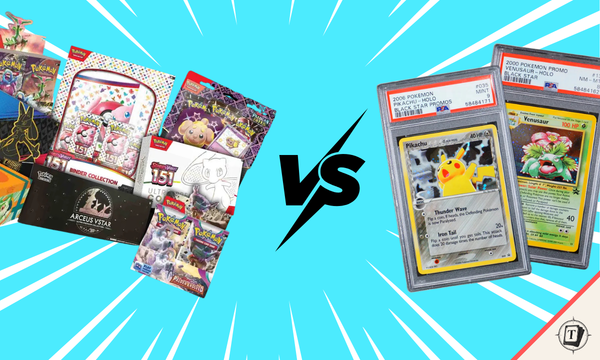
The clearest recent example in Pokémon came during the post-pandemic boom years. Explosive demand through 2020 and 2021 led The Pokémon Company to dramatically ramp up production to meet what looked like permanent, structural demand growth. Sets that would once sell through over months were printed in volumes designed for sustained mania.
When the broader hobby cooled in 2022, the result was a flood of supply hitting a market with rapidly softening demand at the same time (it was kind of nice to have a rest from the scalpers). Several sets from that window saw notable price declines on sealed product, even relative to their original retail price, simply because too much had been printed for the level of ongoing demand. The lesson was not subtle, chasing the hottest, most heavily marketed current release is precisely the moment publishers are most aggressively maximising print runs to meet that same hype and maximising their profit. The two forces, peak hype and peak supply, tend to arrive together, which is exactly the worst combination for a buyer hoping for appreciation(and the wet dream of a casual collector).
Yu-Gi-Oh: Reprints as a Structural Feature, Not a Bug
Yu-Gi-Oh presents a slightly different version of the same problem, and one we have written about directly in our piece on the reprints trap. Unlike Pokémon, where overprinting tends to happen in distinct waves tied to hype cycles, Konami treats reprinting as an ongoing structural tool to keep competitively relevant cards accessible to the playerbase. Format staples get reprinted repeatedly across structure decks, tins, and reprint-focused sets almost as a matter of policy. There’s like a million different Blue Eye’s rolling around these days, it’s hard to keep up.
This creates a very specific kind of risk for Yu-Gi-Oh investors: a card can be powerful, competitively relevant, and in genuine demand, and still be a poor investment, because Konami’s standing policy is to keep meeting that demand with fresh supply rather than letting scarcity drive prices upward. This is precisely why we have consistently pointed toward the highest rarity tiers like, Starlight Rares, Quarter Century Secret Rares, Ultimate Rares, as the category least exposed to this risk. Konami can reprint a card’s functional text as many times as it wants. It is far less willing, and far less able, to replicate the specific premium rarity treatment that made a particular printing scarce in the first place. But with new rarity tiers now, they are almost trying to balance both ends of the spectrum, their real player base, they are actually playing the game and their collector/investor peeps.
Magic: The Gathering — Universes Beyond and the Reprint Debate
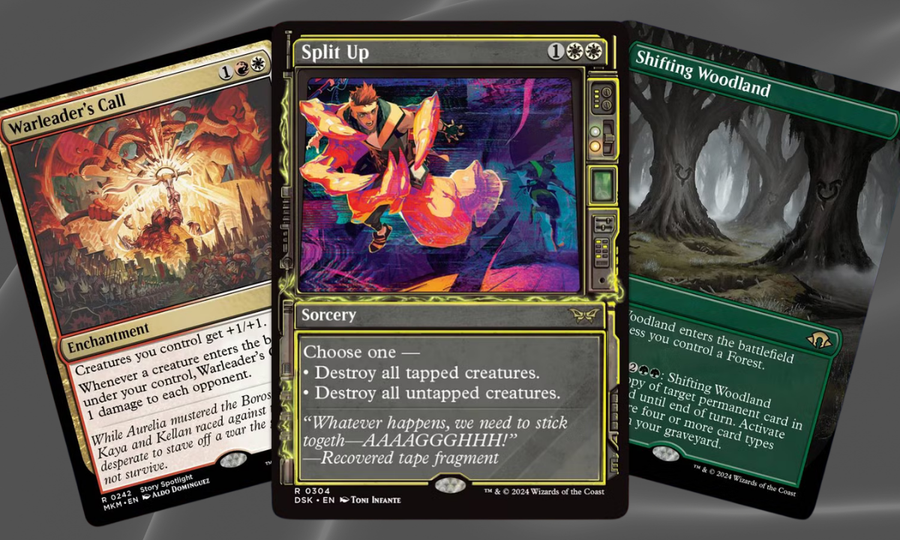
Magic’s version of this conversation has become one of the most contentious topics in the entire hobby. Wizards of the Coast’s increasing reliance on Universes Beyond crossover sets, Secret Lair drops, and direct-to-consumer products has dramatically increased the overall volume of premium and alternate-art product entering the market each year. For investors holding singles from sets that predate this strategy, the conversation around dilution of the broader collector’s attention and spending power, even when their specific cards are not directly reprinted, has become a real consideration.
The Reserved List remains the one structural exception in Magic, a list of cards Wizards has formally committed never to reprint, which we touched on in our First Edition piece. It exists precisely because Wizards recognised early on that unrestricted reprinting was eroding investor trust in the long-term holding of older cards, and they made a rare, binding commitment to a specific category of supply scarcity. No equivalent commitment exists in Pokémon or Yu-Gi-Oh, which is worth sitting with as an investor in either of those games. Yeah MTG is a weird one we are always learning more about.
How to Actually Protect Yourself
None of this means avoid these games entirely (seriously, don’t do that, we are all making each other money in a weird way) that would be throwing out the entire hobby over a risk that can be managed. It means building your buying decisions around an honest assessment of reprint exposure.
Favour genuine scarcity over hype-driven scarcity. Yes, easier said then done. A card that is scarce because of an artificially constrained release is far more exposed than a card that is scarce because of its specific rarity tier, its age, or a structural commitment like the Reserved List.
Watch for signs of aggressive print expansion. If a set stays in healthy retail stock for months after release, or gets multiple reprint waves announced in its first year, that is information about the publisher’s intentions, and it should inform your expectations for that product’s long-term ceiling…. Perfect Order we are looking at you.
Treat hype-cycle releases as short-term plays, not long-term holds, unless the underlying card has the kind of durable demand drivers we discussed in our piece on the Moonbreon Paradox. Most cards caught in a genuine print surge do not have that kind of escape valve.
The TCG Times’ Verdict: Print Risk Is the Cost of Doing Business
Every publisher in this hobby will, at some point, make a decision that quietly erodes the value of product you are holding. That is not a risk you can eliminate. They want the dollars as much as we do! It is a risk you can manage, by understanding which categories of cards are structurally protected from it and which are entirely at the mercy of the next printing decision. The $2 pack is not a hypothetical. It happens regularly, across every major TCG, and the investors who come out ahead are the ones who priced that risk in before they bought, not after the reprint announcement hit.
Disclaimer: The TCG Times is a news and educational platform. All content provided is for informational purposes only and should not be construed as professional financial advice. Trading cards are high-risk, volatile assets. Past performance is not indicative of future results. Always perform your own due diligence before making any financial decisions.