For a long time in the TCG hobby, the idea of calling trading cards an “asset class” would have been met with jokes and laughter, especially in most finance bro circles (spoiler: they are crying now that they didn’t invest). Cards were seen as a nerdy hobby or something you brought for your kids on a Saturday afternoon. The notion that “trading cards” belonged in the same realm as real estate, private equity, stocks or even gold seemed like wishful thinking.
BUT Something changed… And here at The TCG Times, we think it is worth being honest about both what changed and what hasn’t, because the term “legitimate alternative asset class” is a specific and bold claim with specific implications, and the answer is more nuanced than saying it is or it isn’t
What an Alternative Asset Class Actually Means
Before deciding whether TCG cards qualify, we should probably explain what the term actually means. An alternative asset class is simply any investment that falls outside the traditional categories of assets, those traditional categories are usually stocks, bonds, and cash. Where as exmaples of alternative assets are more like real estate, private equity, physical gold or minerals, even things like wine and art.
What separates a legitimate alternative asset from a collecting hobby is not how much money someone has made from it; that’s just to broaden any that can apply to heaps of things that are an “alternative asset”. What makes it an alternative asset is it is whether the infrastructure around it is mature/real enough for serious investors to engage with it as an asset. Yeah, we hear you going blah blah blah, so let’s break it down into some simple questions. If it’s a yes to these its probably an alternative asset.
- Can the Can the assets be authenticated? Yes, think PSA, BGS etc
- Is there transparent, publicly available pricing? Yes, there’s a real market with active prices
- Can you buy and sell without jumping through hoops? Yes… most of the time
- Is there enough market depth that a professional investor could treat it as a real portfolio allocation rather than a one-off punt? Most definitely, if you’re here, you probably already have one
Against those criteria, the TCG card market in 2026 is looking pretty much like a solid asset.
The Moment the Financial World Started Paying Attention
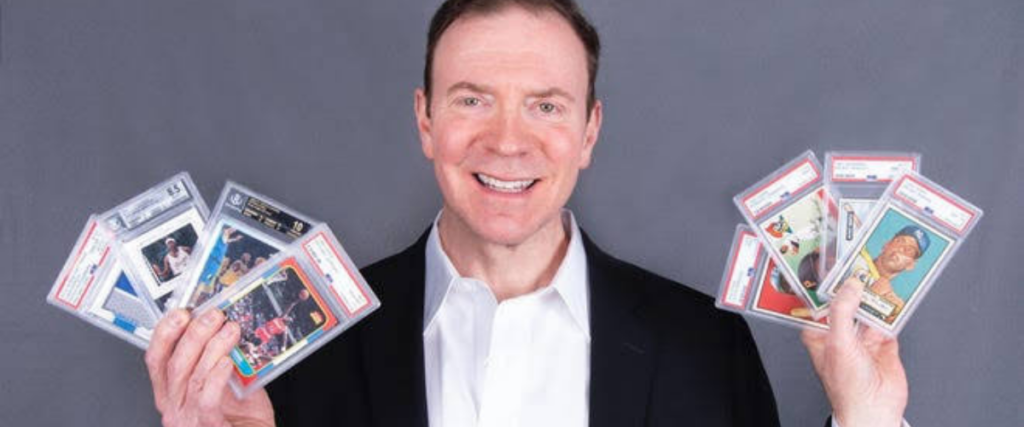
In December 2025, Ken Goldin, the founder of Goldin Auctions, the largest collectibles auction house in the world, yes the guy from the collectible Netflix show. Ken was featured on a CNBC segment and stated directly that trading cards and sports cards had become accepted as an alternative asset by investors and asset managers. This is massive; even if you don’t like the guy, a statement like this one from a massive new network helps solidify your TCG portfolio as an asset with value! Ken’s statement is not a fringe opinion from some random hobbyist in his basement. This is basically an endorsement for trading cards from the CEO of the company handling some of the most significant card transactions in the market, on the world’s most watched financial news network.
Ken knows his stuff and is backed by numbers. Morgan Stanley (a major American multinational investment bank and financial services company) estimates the global collectibles market at $100 billion USD, which is honestly MASSIVE! Plus with an estimated compound annual growth rate of over 6% projected through 2027. To put that into perspective we can all understand, the world of serious alternative investing is worth over $24 trillion USD, that number is pretty much incomprehensible. Like, like $1 trillion is a lot, let alone $24 trillion. So what does this all mean… trading cards are now starting to be taken seriously within the financial asset world.
Then in March 2026, something genuinely historic happened. MemeStrategy Inc (yes, Meme Strategy is their legit name), a publicly listed company on the Hong Kong Stock Exchange (HKEX: 2440), launched the world’s first tokenised Pokémon trading card fund. In normal plain English, a real company built a fund so serious investors could put money into Pokémon cards the same way they would purchase or invest in a stock or ETF. This is a huge difference compared to selling singles on eBay or marketplace. And this fund comes in at perfect timing to land with Pokémon’s big 30th anniversary year. This is the world finally catching up to what we have been saying here at The TCG Times and to people who take TCG collecting/investing seriously for a while now.
The Numbers That Support the Case
Yes, the numbers sound boring, but understand it could be what makes you MONEY! And in saying that, the data makes it very hard to argue against TCG cards as a serious investment that can make you cash!
Overall, the entire TCG market is worth around $15.11 billion USD in 2026, otherwise known as a sh*t ton, and it’s growing at over 10% per year. Pokémon cards have appreciated roughly 3,821% since 2004, yeah, it’s a lot, and now compare that to the S&P 500’s 483% over the same period, kinda putting the stock market to shame, but just remember their losers in both markets. A PSA 10 First Edition Charizard went from a few hundred dollars USD in the late 1990s (most of you probably weren’t even born) to over $500,000 USD at auction in this current day and age. Looking at the PWCC Top 500 Index, which tracks the top 500 trading cards, has delivered returns 94% higher than the S&P 500 over ten years. So yes, if you invested in cards properly, you beat the stock market, but here’s the thing, back in the 90s and early 2000s, people were treating it as an asset.
These are not random numbers and percentages, or random predictions from your favourite influencers; these are FACTS! This is what serious investors look at and track. These serious investors probably also read our Cards vs Capital series (sneaky plug) to see how TCG portfolios have stacked up well against the NASDAQ and Bitcoin in recent periods too.
The Honest Limitations That Remain
Okay, we gave you all the big, juicy-looking numbers, but we can’t just oversell it and bail. There are some real reasons TCG cards are not quite on the same level as real estate or gold just yet, and we need to show you the other side of the coin so you’re not just shooting in the dark. We know what you’re thinking… “wow a TCG finance site that cares, The TCG Times is amazing”, you’re welcome.
Selling is not always easy. Moving a $500 USD card quickly? Fine, a couple of days to a couple of weeks and it’s gone. Moving a $50,000 USD graded card at your ideal price… the buyer pool with $50k USD… a lot smaller.
There is no single grading standard. PSA, BGS, and CGC all do things a little differently and are seen by the market differently as well. The industry srill need to agree on one universal approach to these services, PSA was looking strong, but some rumours and stories have shaken the cage a little.
The market can be moved by a single buyer. One person buying lots of small-value cards or 1 person buying a single high-value card can shake up the entire market. We have covered this in our pieces on scalpers and influencer-driven spikes.
Tax rules… are confusing and all over the place. Depending on where you live, cards could be taxed as collectibles, personal assets, or even business income. We covered this country by country in our Tax Man Cometh piece. We strongly suggest keeping up to date if you are pouring the big bucks into trading cards.
The TCG Times’ Verdict: Yes, it’s Legit, With Caveats
Yes, TCG cards are a legitimate alternative asset class in 2026, and we are confident in that statement. The institutions are taking notice, the data we researched currently backs it up and possibly the craziest reason of all, a company just launched a Pokémon card fund. ooh and the The market is aroud $15 billion USD and growing, one more time for the poepl in the back $15 BILLION USD!
But the caveats are real and slowly changing. Things like liquidity, grading standards, market manipulation (one whale can make waves), and tax complexity all need to be considered. These are definitely not reasons to walk away, they are minders to keep your eyes open and take your investments in TCG as seriously as you would the stock market.
Disclaimer: The TCG Times is a news and educational platform. All content provided is for informational purposes only and should not be construed as professional financial advice. Trading cards are high-risk, volatile assets. Past performance is not indicative of future results. Always perform your own due diligence before making financial decisions.