All prices in USD, late October 2026, shown as ranges. Cards are priced raw (ungraded) because that’s the fairest like-for-like comparison, since graded prices change a lot with the grade and the grading company. Sealed product is factory sealed.
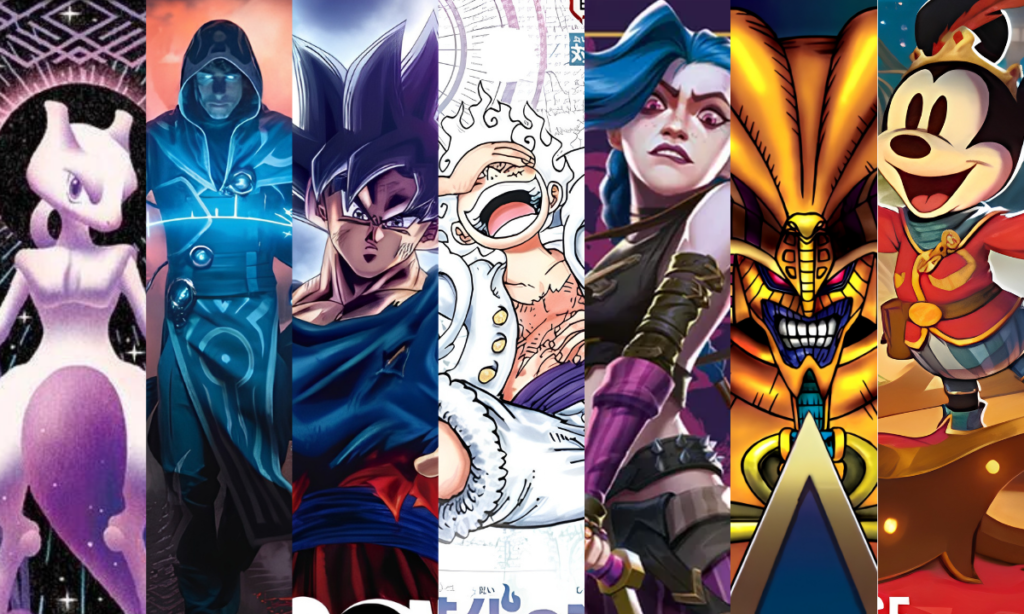
We ran six tests on the top 7 TCGs to deliver the most data-backed, unbiased, and factual rankings to find which is truly the best investment. One won by a mile… yep, probably the one you’re thinking, five finished in a bunch, and one has booster boxes selling for roughly a third to a half of what they cost in the shop. No TCG can hide, this is the real deal to find which is and has been the best investment.
How We Scored Them
Before we go through the 7 TCGs, we need to let you know how we scored them to get our results. For each game, we took three recent sets, 5 to 17 months old. Pokémon was Destined Rivals and Mega Evolution, Magic was Final Fantasy and Avatar, and One Piece was OP-12, OP-13 and OP-14. Yu-Gi-Oh! was Alliance Insight, Supreme Darkness and Justice Hunters, Lorcana was Reign of Jafar, Fabled and Whispers in the Well, Riftbound was Origins, Spiritforged and Unleashed, and Dragon Ball Super Card Game Fusion World was Rivals Clash, Wish for Shenron and Saiyan’s Pride.
Then we scored each game out of 10 on six tests:
- Sealed performance (20%): how far booster boxes have risen above their original retail price
- Track record (20%): how long the game has existed and held up over time
- Liquidity (15%): how many copies of the top cards are for sale (more copies means an easier sale)
- Concentration risk (15%): how much of a set’s value sits in its top 10 cards (less concentrated is safer)
- Reprint protection (15%): how well top cards are shielded from being printed again
- IP durability (15%): how likely the characters and brand are to stay loved (this is one we don’t think gets enough attention)
The last two are our estimates based on market trends. The rest come from clean data.
The Scoreboard
On mobile, scroll to see the full table.
| TCG | Sealed | Track record | Liquidity | Concentration | Reprints | IP | Total |
|---|---|---|---|---|---|---|---|
| Pokémon | 8 | 9 | 9 | 6 | 6 | 10 | 8.1 |
| Magic | 5 | 9 | 6 | 4 | 5 | 8 | 6.3 |
| One Piece | 9 | 4 | 5 | 2 | 5 | 7 | 5.5 |
| Lorcana | 6 | 4 | 5 | 4 | 5 | 9 | 5.5 |
| Riftbound* | 7 | 2 | 6 | 5 | 4 | 8 | 5.3 |
| Dragon Ball Super Card Game Fusion World* | 9 | 3 | 4 | 2 | 3 | 9 | 5.1 |
| Yu-Gi-Oh! | 2 | 7 | 5 | 7 | 2 | 7 | 5.0 |
*Provisional: less than two years of history.
1. Pokémon: The Clear Winner (8.1)
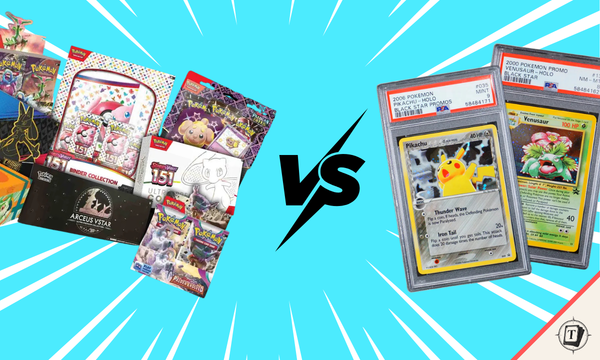
Okay, no one should be surprised by this, let’s be real here, we all knew Pokémon was going to get the top place. If this annoys you remeber were talking about TCG investing not your personal favourite so wipe them tears. Boxes from somewhat recent sets usually sell for about 1.8-2.5x their RRP price, for example, Destined Rivals is about $360-410 compared to $162 at retail. The top cards have deep markets, and Team Rocket’s Mewtwo ex (about $305-350) has over 130 copies for sale. The top ten cards hold about 58-79% of a set’s value, which is fairly concentrated but not overly extreme, compared to what we have seen in other TCGs. Pokémon is the one game with a genuinely high demand floor, in line with our long-run numbers.
To view live prices of every card, visit our Pokémon Card Price page.
2. Magic: Great Ceiling, Wild Gaps (6.3)
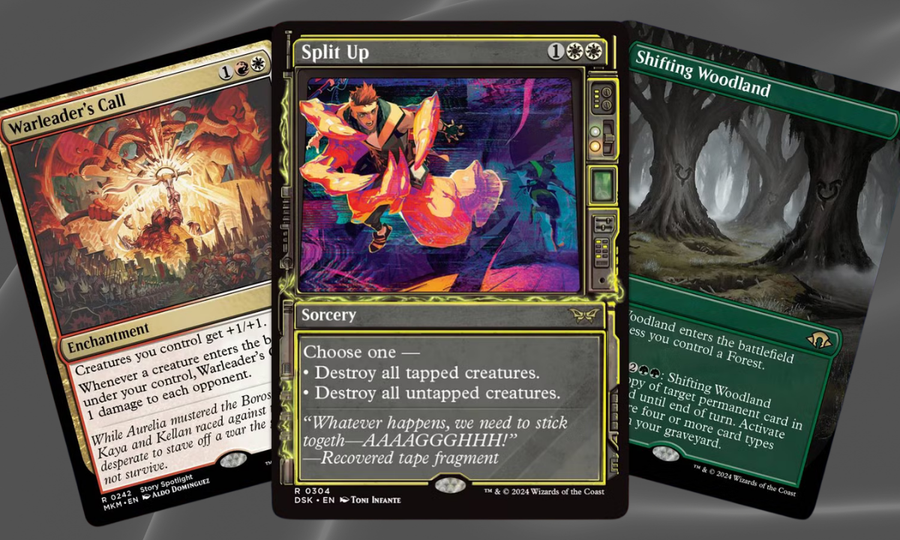
Ha bet you were expecting One Piece taking second place… so were to be honest, even with Magic’s sealed returns being all over the place. A Final Fantasy Collector Booster box is about $1,550-1,750 against around $456 at retail, around a 3.6x gain. Avatar’s is only about 5-10% above retail, and its regular Play Booster boxes sell below it. In Avatar, the top ten cards hold about 90% of the value (Final Fantasy’s hold 57%). Same company, same year, completely different outcomes. Universes Beyond is a lottery, so pick the franchise carefully. What really keeps Magic in the game is its overall track record, every year it consistently releases multiple sets with high-value cards, and its opportunity to collaborate with other IPs is something no other TCG can replicate, giving it a standout point of difference. Oh also, it has people that actually play the game, making cards that would be considered “bulk” to other TCGs generally valuable in certain cases.
To view live prices of every card, visit our Magic: The Gathering Card Price page.
3 (tie). One Piece: High Reward, High Risk (5.5)
Finding the One Piece may be a challenge, but finding the value it holds in the TCG world is slightly easier. For a somewhat newbie TCG still growing its audience within the space, One Piece has the best sealed returns of the established games, big call, but we did the math. OP-13’s box is about 3.5-3.9x its $120 USD retail price after only eleven months, OP-12 and OP-14 are about 2-2.6x, and OP-05 is around 8x after three years, dominating the sealed investment space. But the top ten cards of a set usually hold 80-99% of a set’s value, and the chase cards often have fewer than 20 copies for sale. We covered the hype in is One Piece the next big thing. This is the one for people who can stomach a drop.
3 (tie). Lorcana: One Monster, Two Ordinary (5.5)
Lorcana, not one we speak about regularly, but with a recent boost in popularity, it’s a TCG we couldn’t ignore in this list. Lorcana boxes fall into 3 different categories, which can be shown from these three sets. Reign of Jafar sells for about $150-160 USD, just barely above retail, Whispers in the Well for $200-220 USD, about 1.5-1.8x, which is okay at best, and the Fabled set for $770-830 USD, roughly 5.5-7x, which is obviously super solid. The top cards are some of the rarest cards in the entire hobby, an Iconic Mickey Mouse is about $3,500-4,200 USD with only four copies for sale. The top ten cards hold about 74-80% of a set’s value, and the Disney IP is rock solid. Be careful: one hit set can hide a lot of misses.
5. Riftbound: Fast, Pricey and Young (5.3*)
Riftbound, the newest TCG on this list, is the League of Legends TCG launched in October 2025. Riftbound’s first set, Origins, currently as a price around $215-230 USD against a $120 USD price tag at retail, about 1.9x price gain. The newer Spiritforged and Unleashed boxes sit at about $160-170 USD (1.4x). Each set has 18-23 cards above $100 USD, which is honestly really solid for such a new TCG, and the top ten hold 66-81% of the value, which is still not too bad. Is there a catch? Kinda… the catch is supply, there’s a new set roughly every three months, which tends to dilute the older ones. Strong start, BUT only one year of evidence.
6. Dragon Ball Super Card Game Fusion World: Big Gains, Thin Cards (5.1*)
We love Dragon Ball, the art on the card in our opinion, is so damn awesome but even though we love it, we have to be honest, there is nothing to super when it comes to investing in Dragon Ball TCG, unfortunately. A US box costs roughly $95-110 USD at retail, Saiyan’s Pride (10 months old) sells for about $260 USD, Wish for Shenron (13 months) is now about $380-400 USD, and Rivals Clash (17 months) is about $510-580 USD, which is roughly 2.5x, 3.5-4x and 5-6x. We hear you asking, so what’s the issue… Rivals Clash’s top card (a Broly alt art) is listed at about $5,000 USD with one copy for sale, the top ten cards hold 78-97% of each set’s value, and our data shows at least six, yes SIX “Alternate Art Reprints” products, a reprint warning, the reprints here is insane, and it’s the biggest problem when it comes to investing. Big upside, fragile footing.
7. Yu-Gi-Oh!: The Sealed Trap (5.0)
Oh Yu-Gi-Oh! the king of the reprint. Recent boosters sell for about $30-55 USD against roughly $108 USD retail….ouch! About $4.49 USD a pack some earlier sets may have launched slightly differently, so about 30-50% of retail, not good at all. Yu-Gi-Oh! does win on one thing though and that’s the spread of value throughout a set, the top ten cards usually hold only 51-64% of a set’s value. But here’s the kicker the top cards aren’t usually worth much at all, with only 0-2 cards per set above $100 USD, and staples get reprinted constantly (see the Reprints Trap). Skip sealed modern Yu-Gi-Oh!, and if you invest, stick to nostalgia singles and the original era.
To view live prices of every card, visit our Yu-Gi-Oh! Card Price page.
The Reality Check
Seven of the biggest TCGs currently, divided by the data, not guesswork. Places 3 to 7 are separated by only half a point, so treat them with a touch of flexibility. This ranking is predominantly for modern sets, vintage Pokémon and original-era Yu-Gi-Oh! are different beasts and markets entirely. We must note, a score isn’t a promise. This is based on each TCG overall. Sometimes a set from a lower-rated TCG on this list can outperform a set from a higher-rated one, as in any market you have to know what you’re looking at.
The TCG Times’ Verdict: Pokémon First, Then Pick for Your Style
Safest bet: Pokémon, by a fairly wide margin. Second: Magic: The Gathering, but this comes with understanding the TCG and the universe beyond sets. Everything from 3 to 7 is bunched up pretty tight, so choose by taste and consider the risks, especially reprints! One Piece for sealed upside, Lorcana for Disney’s super strong IP, Riftbound and Dragon Ball Super Card Game Fusion World if you want to get in early and can stomach the risk. Last place: Yu-Gi-Oh! as a sealed investment… sometimes.
Disclaimer: The TCG Times is a news and educational platform. All content provided is for informational purposes only and should not be construed as professional financial advice. Trading cards are high-risk, volatile assets. Past performance is not indicative of future results. Always perform your own due diligence before making financial decisions.